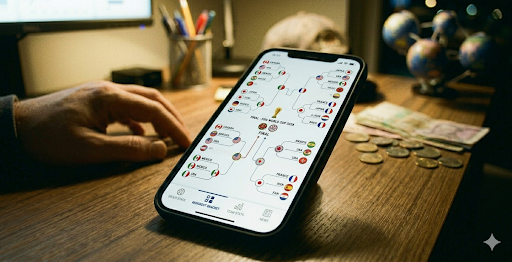
World Cup Betting Analytics and Data Strategy 2026
When people hear "betting analytics" they picture someone with four monitors running probability models at 2am. That's one version of it. Not the version most of us need. The version that actually helps everyday bettors is simpler. Know which numbers matter. Know where to find them quickly. Know how to use them to make a better decision than someone who's just going on reputation and vibes. I started tracking xG for World Cup teams before 2022 after getting burned backing a team purely because of their historical record. Turned out their current qualifying campaign xG numbers were genuinely below average and their goal totals were propped up by a couple of outlier matches. The underlying data was telling a different story from the headlines. I backed against them in a specific match and cashed. That's what data actually looks like in practice.


Layer One: Pre-Tournament Data Foundations
Before June 11 you have time to build basic profiles on the teams you're planning to bet regularly. Not all 48. Pick eight to twelve nations based on the groups and matchups you find most interesting.
For each team, pull these numbers from their qualifying campaign and recent internationals:
- Expected goals for and against per match
- Shot volume and shot-on-target rate
- Possession percentage and pressing intensity
- Set piece reliance as a percentage of total goals scored
These tell you how a team actually plays versus how their reputation suggests they play. Some nations with strong historical records have genuinely mediocre current underlying numbers. Some lesser-known qualifiers have quietly strong defensive profiles that make their odds in certain matchups genuinely attractive.
Read More: The Complete Guide to World Cup Betting 2026
Layer Two: Using Data for Market Selection
This is where analytics changes how you bet rather than just what you bet.
The process works like this. Build a simple expected goal total for a match based on both teams' xG profiles and the quality of opposition they've faced. Compare your number against the posted match total. When your model produces a meaningful difference from the book's line, that's a potential value position.
The same logic applies to team totals and BTTS markets. If your data suggests Spain generates 1.8 xG per game against comparable opposition and the team total is set at over/under 1.5, that's a marginal over position. If it's set at 2.5, the under is more defensible.
You don't need a sophisticated model. You need consistent inputs applied the same way before every bet you want to place. The discipline of running the same process consistently matters more than the complexity of the model itself.
Before you bet the World Cup, check Shurzy's Predictions for the best betting angles and value plays.
Layer Three: In-Play Analytics and Speed
Live betting is where data creates the clearest edge for bettors who are actually watching the match with live statistics available.
The specific situation that generates the most reliable value looks like this. The live scoreline doesn't reflect what the underlying match data shows. A team is losing 1-0 but dominating on xG, shots, and territorial pressure. The live market has moved toward the opponent because of the scoreline. Your data says the leading team's advantage is fragile and the underlying game favors the other side.
Key live metrics to track during matches:
- Expected goals for both teams updated in real time
- Shot count and quality, not just total shots
- Pressing intensity and territorial dominance
- Whether the scoreline came from genuine chance quality or fortunate circumstances
When the live price contradicts what your real-time data shows, that's an entry point. When the live price and the data align, there's no edge even if the market looks appealing.
Layer Four: Format and Context Variables
The 2026-specific data inputs that most public models and odds boards underweight.
Travel distance and rest days between matches create measurable performance differences at international tournament level. A team playing in Miami three days after a match in Vancouver is operating under different physical conditions than their pre-tournament fitness levels suggest.
Different confederation styles create specific matchup patterns. CONMEBOL teams tend to play more physically and generate different xG profiles against high-press European sides than against other South American nations. CAF qualifiers have specific defensive tendencies that their overall xG numbers don't always capture. These context variables feed directly into totals and team prop betting when you're evaluating specific matchups rather than just team quality in isolation.
Want better World Cup bets? Use Shurzy's Predictions tool for data-driven picks and insights.
Layer Five: Using Public Market Data as Your Baseline
You don't have to outrun the market on everything. You just have to identify where your specific analysis diverges from what the market has priced.
ESPN's group odds, advancement probabilities, and implied win rates encode the current market consensus on every team. Treat these as your starting point, your prior belief before you apply your own analysis. Only bet where your data genuinely supports a meaningful adjustment to that consensus.
When your xG model says a team is meaningfully better than their implied probability suggests and the market hasn't fully caught up, that's a value position. When your model confirms what the market already has priced, there's no edge regardless of how confident you feel about the result.
A Simple Workflow That Actually Works
Pre-match: run the fixture through your basic xG and shot volume model, note any meaningful difference from posted totals and team props, identify the market that best expresses your read.
During the match: monitor live stats and compare to pre-match expectations. Only enter live positions when the in-game data diverges meaningfully from the current live market price.
Post-match: record the odds you took and closing odds for comparison. Track which data inputs are consistently generating value versus which ones you're overweighting.
Simple. Repeatable. Better than vibes.
Looking to get an edge throughout the entire World Cup? Check out Shurzy's Predictions tool for data-backed picks, matchup insights, and betting angles across every stage of the tournament. Whether it's group matches or knockout rounds, this is where smart bettors find value.

Minimum Juice. Maximum Profits.
We sniff out edges so you don’t have to. Spend less. Win more.


RELATED POSTS
Check out the latest picks from Shurzy AI and our team of experts.