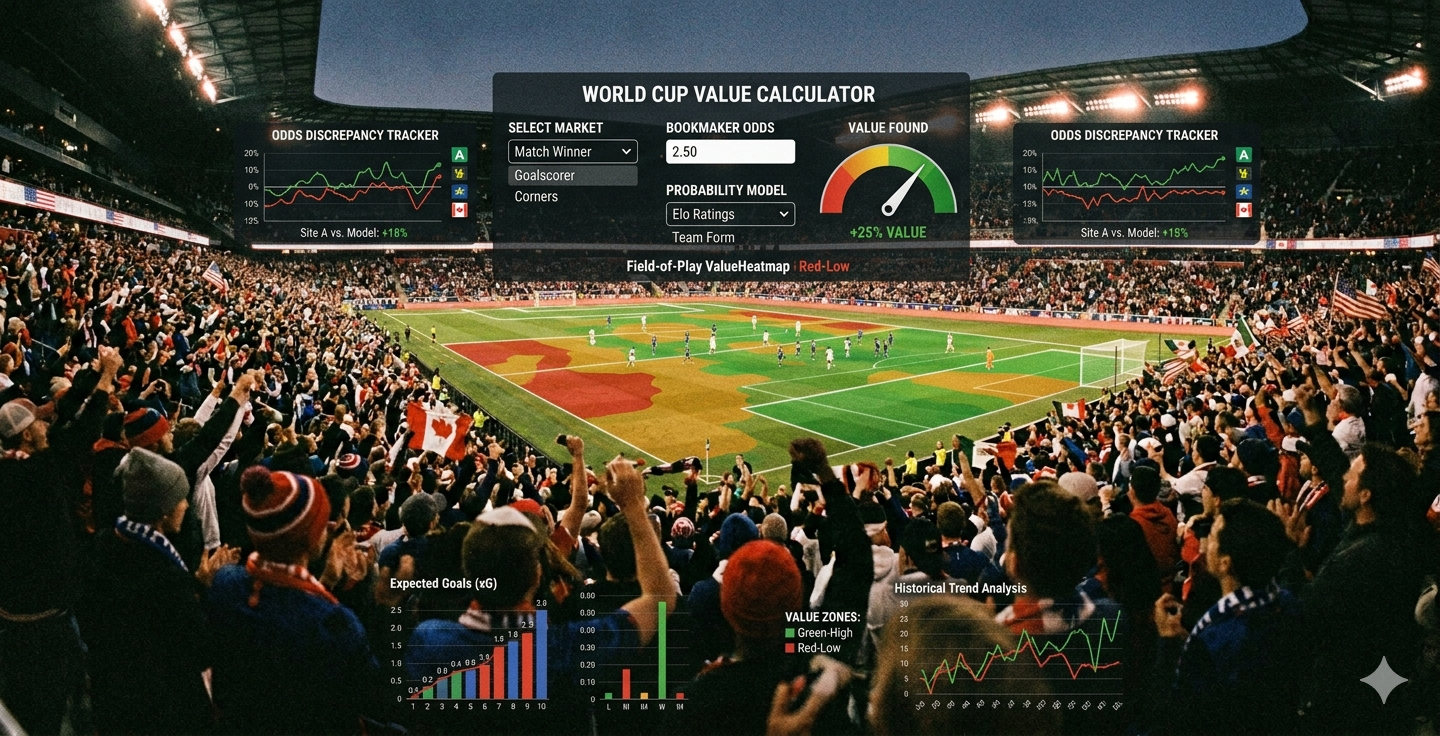
World Cup Climate Zones And Team Adaptation
Climate is one of those World Cup betting factors that sounds obvious, then somehow gets ignored. A team can look great on paper, but heat, humidity, altitude, wind, or cooler conditions can change how it actually plays. The legs feel different. The ball moves different. The tempo shifts. This guide breaks down how I’d use climate zones and team adaptation in World Cup betting. Not as a shortcut. As a way to spot which teams may handle the setting better than the market expects.


Key Insights
- Quick Answer: Climate zones matter when heat, humidity, altitude, cold, wind, or travel changes how teams perform.
- Best Way To Get Better Results: Compare climate conditions with team style, player workload, travel path, and live fatigue signs.
- Biggest Advantage: You can avoid betting stale team ratings when the match environment changes the real performance level.
Why Do Climate Zones Matter In World Cup Betting?
Climate zones matter because World Cup matches are not played in identical conditions.
For the bigger picture, start with Advanced World Cup Betting Strategy Guide 2026. That pillar guide should be your base for value betting, bankroll control, market timing, futures, props, and live betting.
The 2026 World Cup will be hosted across Canada, Mexico, and the United States, with FIFA confirming three host countries and 16 host cities. FIFA’s schedule page also lists 104 matches for the expanded tournament.
That matters because a match in Canada may feel very different from a match in Mexico or a southern U.S. city.
Different climate. Different travel. Different recovery. Different tempo.
A team used to cooler conditions may not handle heat well. A high-pressing side may struggle in humidity. A team moving into altitude may need to manage energy. A team that plays direct may be affected by wind.
The betting angle is simple:
Does the climate make one team’s usual style harder to trust?
If yes, check the price.
That is where the edge can start.
Looking to get an edge throughout the entire World Cup?
Check out Shurzy’s Predictions tool for data-backed picks, matchup insights, and betting angles across every stage of the tournament. Whether it’s group matches or knockout rounds, this is where smart bettors find value.
What Are Climate Zones In Betting Terms?
Climate zones are not just map labels for bettors.
They are match conditions.
In betting, I’d think about climate through things like:
- Heat
- Humidity
- Altitude
- Wind
- Rain
- Cold
- Dry air
- Indoor or controlled stadium conditions
- Day vs night kickoff
- Travel from one climate to another
You do not need to become a meteorologist.
Please don’t.
You just need to understand how the setting may affect the match.
A hot, humid match may slow pressing. A cooler match may help tempo. A windy match may hurt long balls and crosses. Altitude may affect recovery and late-game stamina. Rain may make the pitch faster or messier.
Each condition can change betting value.
But only when it affects the teams differently.
That is the key.
If both teams handle the climate well, maybe no edge.
If one team clearly adapts better, now we care.
How Does Heat Affect Team Adaptation?
Heat can slow matches down.
Not always, but often enough to watch.
Teams that rely on pressing, repeated sprints, and fast transitions may need to manage energy better in hot conditions. Fullbacks may overlap less. Midfielders may press in shorter bursts. Coaches may substitute earlier.
Heat can affect:
- Match tempo
- Pressing intensity
- Player props
- Late-game fatigue
- Cards
- Corners
- Totals
- Live betting value
But heat does not automatically mean under.
That’s too simple.
Heat can also create late defensive mistakes. Tired players stop tracking runners. Tackles get late. Clearances get sloppy. Fresh substitutes become more dangerous.
So for hot matches, I’d ask:
Does heat hurt the attack more, or the defense more?
That answer matters more than the temperature itself.
How Does Humidity Change The Betting Read?
Humidity can make players feel heavy.
You may not see it right away. The first 20 minutes might look normal. But as the match goes on, pressing can fade, recovery runs can slow, and players may stop making the same support runs.
Humidity is especially important for teams that depend on:
- High pressing
- Long defensive shifts
- Fast counters
- Sprint-heavy wingers
- Aggressive fullbacks
- Late-game pressure
For betting, humidity can affect second halves more than first halves.
That means live betting can be useful.
If one team starts fading around minute 60, I’d start watching opponent team totals, late overs, cards, corners, and substitute props.
Humidity is not always a pre-match bet.
Sometimes it is a live clue.
And live clues can be more useful than weather notes.
How Does Altitude Fit Into Climate Adaptation?
Altitude is one of the clearest climate-related betting factors.
Mexico City is the main 2026 example. Britannica lists Mexico City’s downtown elevation at about 7,350 feet, or 2,240 meters, above sea level. Guadalajara is also elevated at about 5,100 feet, or 1,550 meters, while Monterrey is lower at about 1,765 feet, or 538 meters. (Encyclopedia Britannica)
That’s why High Altitude Stadiums And Betting Strategy 2026 World Cup fits naturally here. Altitude is one of the most important climate-zone angles because it can affect stamina, pressing, recovery, and late-match performance.
But don’t treat all Mexico venues the same.
Mexico City is not Guadalajara. Guadalajara is not Monterrey.
Different elevation. Different climate. Different betting read.
For altitude, I’d check:
- Which team is more adapted?
- Which team traveled from lower altitude?
- Which team relies more on pressing?
- Which team has better depth?
- Which players carry heavy minutes?
- Did the market already adjust?
Altitude should be part of the full climate read.
Not a blind betting button.
Want better World Cup bets?
Use Shurzy’s Predictions tool for data-driven picks and insights.
How Can Climate Zones Affect Totals?
Climate can push totals up or down.
That’s why lazy rules get bettors cooked.
Hot conditions may lower tempo and support unders. But tired defending can create late goals. Rain can hurt passing rhythm but also create slips, rebounds, and goalkeeper problems. Wind can hurt crosses but also create weird clearances.
For totals, I’d ask:
- Does the climate slow tempo?
- Does it hurt finishing?
- Does it create defensive mistakes?
- Does one team adapt better?
- Are substitutions likely to change pace?
- Did the market already move?
Sometimes the best climate total is first-half under.
Sometimes it is second-half over.
Sometimes it is no bet until live.
That’s the point.
Climate does not give one answer.
It changes the questions.
How Can Climate Zones Affect Player Props?
Player props can be very climate-sensitive.
A player’s average output may not match the current conditions.
A winger who usually attacks over and over may have lower shot volume in heat or humidity. A midfielder may pass less if his team plays more direct. A defender may become more card-prone if he is tired and late into tackles.
For props, I’d check:
- Does the player rely on speed?
- Does he press often?
- Is he likely to play full minutes?
- Is he coming off heavy workload?
- Does climate increase sub risk?
- Does the condition hurt crossing or passing?
- Does fatigue help cards or tackles?
Climate can hurt attacking overs.
But it can help defensive props.
Cards. Tackles. Saves. Clearances. Opponent corners.
So don’t just remove bets because conditions are tough.
Shift to the markets the conditions help.
How Can Climate Affect Cards And Corners?
Cards and corners can be strong climate-related markets.
When players tire, they foul more. When teams sit deeper, they concede more pressure. When defenders stop recovering, wide attacks can create blocked crosses and corners.
For cards, I’d watch:
- Tired fullbacks
- Late tackles
- Counterattack fouls
- Frustration
- Referee style
- Match pressure
For corners, I’d watch:
- Deep defending
- Blocked crosses
- Wide attacks
- Poor clearances
- Fresh wingers
- Late pressure
Climate often shows up before the scoreboard changes.
A team may still be level but clearly defending deeper. That can create corner value. A midfielder may still be playing, but his legs are gone. That can create card value.
Not every edge needs a goal.
Sometimes the cleaner bet is the ugly one.
How Can Teams Adapt To Climate Better Than Others?
Adaptation depends on style, fitness, depth, and background.
A team used to slower possession may handle heat better than a team that presses like crazy. A team with strong bench options may rotate earlier. A team with players from similar climates may settle faster.
I’d look at:
- Player backgrounds
- Team playing style
- Squad depth
- Rotation quality
- Fitness profile
- Travel path
- Rest days
- Previous match workload
But be careful.
Do not overstate climate familiarity.
A team from a warm country does not automatically dominate in heat. A team from a cooler country does not automatically collapse. Fitness, tactics, and preparation still matter.
Climate is one layer.
Not the whole bet.
The market may overreact to climate narratives too.
So keep checking price.
Always price.
How Can Live Betting Confirm Climate Impact?
Live betting is one of the best ways to use climate.
Pre-match, you can build the theory.
Live, you can test it.
After 10 to 15 minutes, I’d ask:
- Is the tempo lower than expected?
- Is pressing weaker than normal?
- Are players recovering slowly?
- Are passes affected by wind or rain?
- Is one team more comfortable?
- Is the live market reacting too much?
Then check again after minute 55.
That’s usually when heat, humidity, altitude, and travel fatigue become louder.
If one team starts fading, markets can open up:
- Opponent team total
- Late over
- Cards
- Corners
- Saves
- Fresh substitute props
- Live spread
The best climate read may not be available before kickoff.
Sometimes you need the match to show you who is handling the conditions.
What Are The Biggest Climate Betting Mistakes?
The biggest mistake is using climate like a shortcut.
“Heat means under.”
“Rain means chaos.”
“Altitude means fade.”
Nope.
Other mistakes include:
- Ignoring team style
- Ignoring adaptation
- Ignoring travel and rest
- Treating all host cities the same
- Betting props from averages only
- Missing live fatigue signs
- Assuming both teams are affected equally
- Ignoring substitutions
- Forgetting the price
That last one again.
A climate edge only matters if the odds are wrong.
If the market already adjusted, the edge may be gone.
Good read. Bad number.
Pass.
What Is A Simple Climate Adaptation Checklist?
Here’s the quick process I’d use.
First, identify the climate condition. Heat, humidity, altitude, cold, wind, rain, dry air, or indoor setup.
Next, match it to team style. Pressing, possession, crossing, counters, low block, or direct play?
Then check travel and rest. Did one team have a tougher adjustment?
After that, check player props. Who relies on sprinting? Who may lose minutes? Who may benefit from fatigue?
Then watch live if possible, especially after minute 55.
Finally, compare everything to the price.
If climate creates a real edge and the market has not caught up, maybe there’s value.
If not, pass.
No forced weather nerd bets.
Where To Go Next
If you want to focus on the broader weather board, read World Cup Weather Impact On Betting Outcomes 2026 next. It breaks down how heat, rain, wind, humidity, pitch condition, and forecasts can affect sides, totals, props, cards, corners, and live betting.
Before you bet the World Cup, check Shurzy’s Predictions for the best betting angles and value plays.
FAQ
Do Climate Zones Affect World Cup Betting?
Yes. Climate zones can affect stamina, tempo, fatigue, passing, pressing, substitutions, props, totals, cards, corners, and live odds.
Does Hot Weather Always Mean Lower Scoring?
No. Heat can slow tempo, but it can also create late defensive mistakes, fouls, fatigue, and second-half chances.
Why Is Altitude Important For The 2026 World Cup?
Altitude matters because venues such as Mexico City and Guadalajara sit well above sea level, which can affect stamina, recovery, pressing, and late-game performance. (Encyclopedia Britannica)
Can Climate Affect Player Props?
Yes. Climate can affect minutes, sprint output, shots, passes, cards, tackles, saves, and substitution risk.
What Is The Biggest Climate Betting Mistake?
The biggest mistake is betting climate as a shortcut without checking team style, adaptation, travel, rest, live match signs, and current price.

Minimum Juice. Maximum Profits.
We sniff out edges so you don’t have to. Spend less. Win more.


RELATED POSTS
Check out the latest picks from Shurzy AI and our team of experts.