World Cup Group of Death Performance Trends
Group B. Spain. Netherlands. Chile. Australia. Spain were the reigning World Cup and double European champions. Netherlands had been finalists four years earlier. Chile were a legitimate dark horse. Australia were just happy to be there but still. Spain lost their first two games and went home. As defending champions. In the group stage. From what is widely considered the greatest single group in World Cup history. I remember watching that group like it was a ten-part drama series compressed into nine days. Genuinely cannot remember a single match from the group stage in 2022 that gave me the same feeling. The group of death was the best thing in football. And 2026 has basically killed it.


Why the 2026 Format Killed the Classic Group of Death
The original group of death concept relied on one brutal structural reality. Two teams go through. Four strong teams in one group means at least one heavyweight goes home in the group stage. Maximum drama. Guaranteed controversy.
2026 changed the math completely.
Three teams now qualify from most groups instead of two. That one structural change dismantles the group of death concept almost entirely because the core threat that defined it is gone. Two elite teams in the same group no longer guarantee that one of them exits early. Both can go through. Sometimes both do alongside a surprise third.
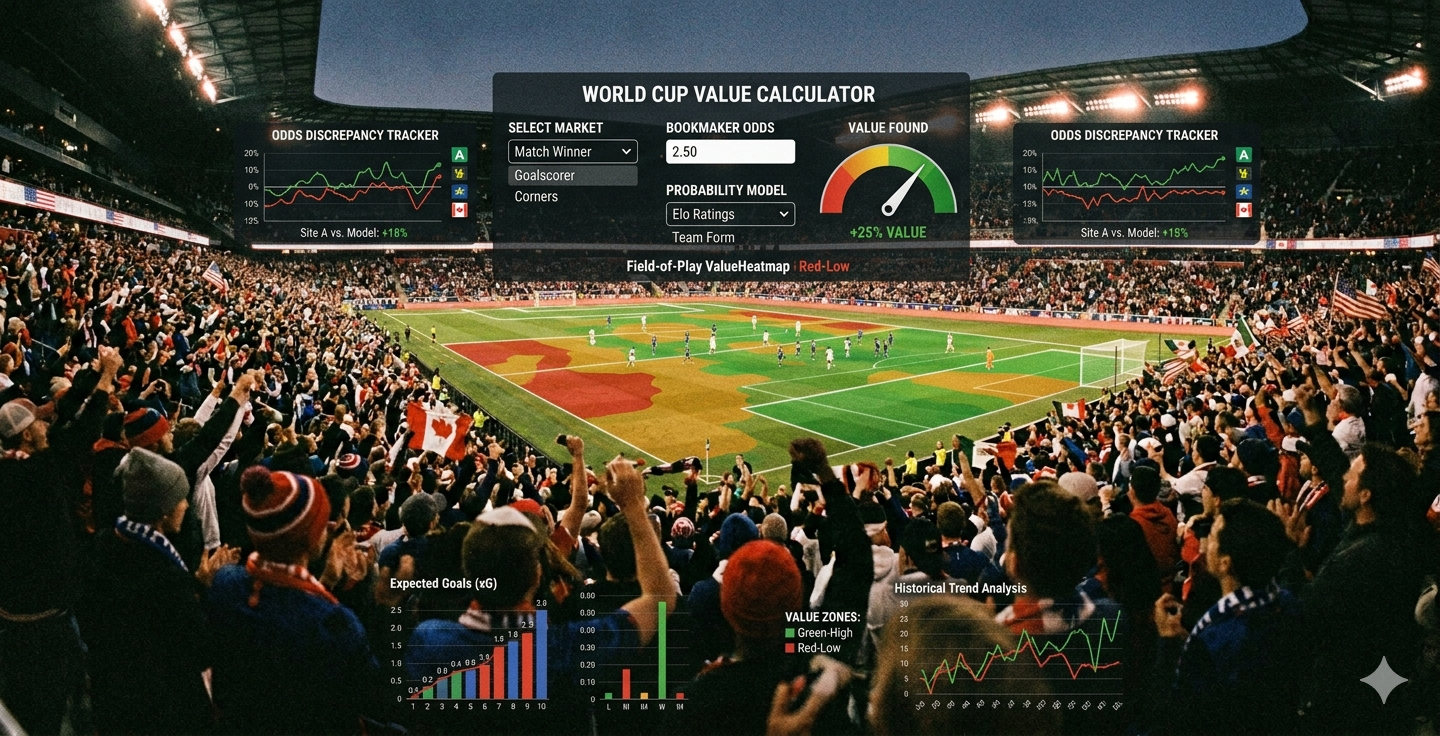
ESPN analysis used Elo ratings to quantify exactly what happened. The toughest groups in the classic 32-team era had average Elo ratings around 1,888. Genuinely brutal collections of quality. In 2026 the toughest projected groups land around 1,883 Elo average on paper but the lethality is completely different because three teams escape instead of two.
The structural risk that defined the group of death has been engineered away. Not accidentally. Deliberately.
Read More: The Complete Guide to World Cup Betting 2026
What Replaced the Group of Death
The group of death is dead. Something else took its place and it's actually more interesting from a betting standpoint even if it generates fewer dramatic headlines.
Instead of one or two brutal death groups, 2026 produces a larger number of moderately tough groups where favorites have a safety net but not a guarantee. The danger is more spread out. More evenly distributed across the bracket.
This creates a specific dynamic worth understanding:
- Favorites can afford one bad result without panicking about group stage elimination
- But two bad results still creates genuine must-win pressure in the final group game
- The third-place qualification path creates a category of teams who are always alive but never comfortable
- Group difficulty now matters more for seeding and bracket position than for raw survival
The conversation in 2026 preview coverage has already shifted. Nobody is talking about death groups anymore. They're talking about difficult groups, tricky draws, loaded groups with mid-tier quality. The language changed because the reality changed.
Want better World Cup bets? Use Shurzy's Predictions tool for data-driven picks and insights.
What This Means for Big Team Betting
The death of the group of death has a direct impact on how you should be pricing elite nations in 2026 outright markets.
Previously a brutal group draw was a genuine threat to a top nation's tournament. Spain in 2014 proved that. Italy in 2014 proved that too, going out from a group with Uruguay, Costa Rica, and England. One terrible group draw and a world-class nation's tournament is finished before the knockouts even start.
In 2026 that risk is structurally reduced for the elite teams. Three qualifiers per group means a bad matchday one result doesn't trigger a crisis. A team that loses game one can still comfortably qualify in second or third. The format has been made safer for the traditional powers in a way that previous tournaments were not.
Practical implications for betting:
- Outright prices for elite nations should theoretically be slightly shorter than equivalent 32-team tournaments because group stage elimination risk is lower
- The surprise group stage exit for a top nation is still possible but requires two bad results rather than one, which is a meaningfully higher threshold
- Early tournament futures value shifts toward mid-tier nations who now have a genuine third-place safety net that previous formats denied them
Read More: World Cup Tournament Progression Betting Strategy
Before you bet the World Cup, check Shurzy's Predictions for the best betting angles and value plays.
The Markets Worth Adjusting
Group of death trends, or more accurately the absence of them, affects specific markets in 2026:
- Group winner markets -- the third-place safety net makes group winner bets on strong favorites slightly less safe than they look. A team can comfortably go through in third and not bother chasing first place. Group runner-up and group third-place markets are underused
- Stage of elimination futures -- mid-tier nations with genuine quality now have better paths to the round of 16 than previous formats allowed. These teams are frequently underpriced in stage of elimination markets because the model still carries 32-team format assumptions
- Outright prices for traditional powers -- slightly lower group stage elimination risk means the gap between elite nations and second-tier contenders in outright markets should be modestly wider than it looks in pre-tournament pricing
The Bottom Line
The 2026 group of death is dead. Three qualifiers per group killed it. The structural threat that made 2014 Group B one of the greatest sporting spectacles in recent memory cannot exist in the same form when three teams escape instead of two.
That's not necessarily worse for football. It might actually produce a more competitive tournament overall with fewer early shocks and more genuine quality in the knockout rounds.
But it is definitely different. And betting the 2026 group stage like it's the same format as 2014 is how you end up confused when Spain comfortably advance in third place from a group that would have sent them home in any previous tournament.
The math changed. Adjust accordingly.
Looking to get an edge throughout the entire World Cup? Check out Shurzy's Predictions tool for data-backed picks, matchup insights, and betting angles across every stage of the tournament. Whether it's group matches or knockout rounds, this is where smart bettors find value.

Minimum Juice. Maximum Profits.
We sniff out edges so you don’t have to. Spend less. Win more.


RELATED POSTS
Check out the latest picks from Shurzy AI and our team of experts.