World Cup Group Stage Betting Trends Over Time
I used to think group stage betting was easy. Big team, small team, back the favorite, collect the winnings. Then Germany crashed out of the 2018 group stage and I had to sit with that for a very long time. Here's the truth: group stage betting has patterns. Real, repeatable, profitable patterns that the average bettor completely ignores because they're too busy backing whoever has the most recognizable jersey. Let me break down what the data actually shows — and what you should be doing with it.


How Books Price Group Stage Markets
Every cycle, the same structure shows up. Short favorite, live second choice, two teams that are basically just there to make up the numbers.
For 2026 it looks something like this:
- Group C: Brazil –290, Morocco +450, Scotland +700, Haiti +10000
- Group I: France –175, Norway +250, Senegal +700, Iraq +3000
- Group L: England –220, Croatia +340, Ghana +700, Panama +4500
Familiar, right? Books are building these prices off power ratings, FIFA rankings, and draw difficulty. Nothing revolutionary. But here's where it gets interesting.
Top seeds win their groups a lot. But not always. And "to qualify" is a very different bet from "to win the group." Books have gradually figured this out too — they've shortened qualification odds and lengthened group winner props because single round-robin play is genuinely volatile.
One bad day and the group winner is someone nobody expected. That's not a bug in the system. That's the system.
Read More: The Complete Guide to World Cup Betting 2026
The Underdog Handicap Edge That Won't Go Away
Okay here's the part your bookie definitely doesn't want you reading.
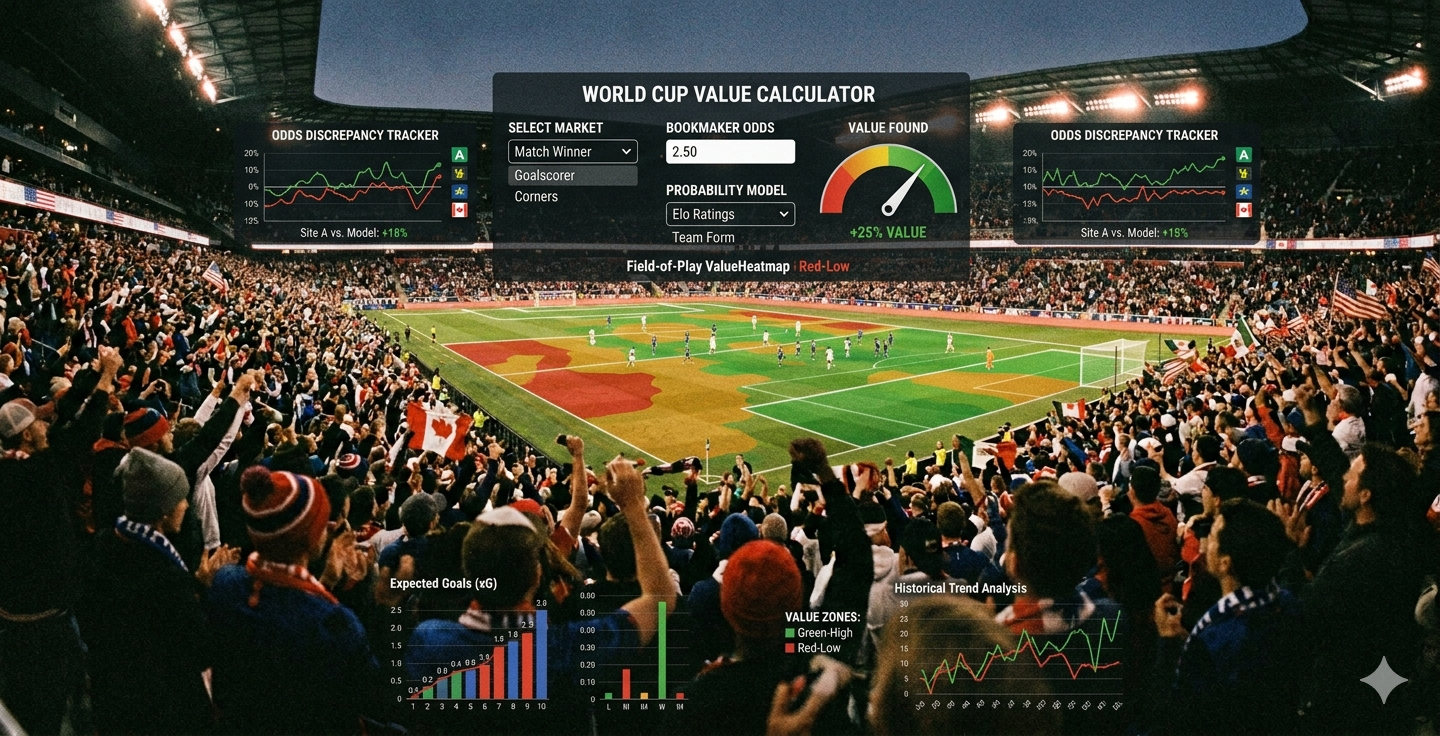
Large underdogs — teams getting +1.0 Asian handicap or bigger — produced +5.62 units of profit across 140 World Cup matches since 1998. That's roughly 4% ROI at level stakes. Win or push rate just under 54%.
That edge held up in almost every tournament. Only 2002 and 2006 were exceptions, when the heavyweights were absolutely ruthless and covered everything in sight.
Every other cycle? Underdogs were quietly printing.
Why does this keep happening in the group stage specifically:
- Favorites win games but often not by enough to cover inflated spreads
- Matchday 3 is a goldmine — already-qualified teams manage risk and don't go all out
- Minnows occasionally get motivated and competitive in ways the market doesn't price in
This isn't a fluke. It's been happening for 25 years. The market is aware of it and still hasn't fully corrected for it.
Want better World Cup bets? Use Shurzy's Predictions tool for data-driven picks and insights.
Goals, Totals, and When to Bet the Over
Group stage football scores more. That's just a fact.
Over 2.5 goals hits roughly 50 to 55% of the time in group matches. Compare that to knockout rounds where unders dominate at around 55 to 60%. The difference is real and consistent across multiple tournaments.
Group stage overs hit more because:
- Matchday 1 teams are still figuring out their path to qualification and play more open
- Matchday 3 is chaotic — sides chasing goals on goal difference create wide-open games
- Quality gaps between top seeds and minnows lead to lopsided scorelines
Books have adjusted by shading group totals slightly higher than knockout lines. But motivated must-win situations in matchday 3 still create genuine over value that the market sometimes underprices.
The key is context. A dead rubber between two already-qualified teams? Under. A must-win situation for a team needing two goals? Over. Simple as that.
Read More: World Cup Motivation and Incentive-Based Betting
When to Shop Lines and Why It Matters
Sharp bettors attack group markets early. And for good reason.
Futures and group prices can shift 10 to 15% between draw day and tournament kickoff. That's not a small number. That's the difference between a bet that has value and one that doesn't.
A few things that consistently move group lines:
- Injury news for key players — Spain's odds shifted noticeably after Lamine Yamal injury concerns surfaced
- Late team news on lineup rotation for matchday 3
- Public money flooding in on big names right before kickoff
The window between draw day and the first match is where the real edges live. By the time a game is 48 hours away, lines are tight and the value is mostly gone.
Get in early. Check back on news. And don't wait until the day of the match to lock in your bets.
What 2026's 48-Team Format Changes
The expanded format shakes up group betting in ways that matter.
More groups with obvious top seeds means more chalk situations. Brazil at –290, England at –220 — these are the kinds of prices that look safe but have historically underperformed as blanket bets.
But the biggest wrinkle is third-place qualification. In 2026, the top two plus some third-place teams advance. That changes motivation completely. A team that's already through as first and second might not be going all out on matchday 3. Neither is a team that knows third place might still be enough.
That creates real value in totals and handicap markets for late group matches. The motivation angle is going to be one of the most exploitable edges of the entire tournament.
Travel and rest disparities are also new. With matches spread across the USA, Canada, and Mexico, some teams are flying cross-continent between games. Historical World Cups didn't have that. It's a genuine edge point that the market is still figuring out how to price.
Looking to get an edge throughout the entire World Cup? Check out Shurzy's Predictions tool for data-backed picks, matchup insights, and betting angles across every stage of the tournament. Whether it's group matches or knockout rounds, this is where smart bettors find value.
The Crashes Nobody Saw Coming
Let's talk about the 2 to 3 big crashes that happen every single tournament.
Italy in 2010. Spain in 2014. Germany in 2018. All top seeds. All gone before the knockouts. All backed heavily by the public right up until they weren't.
In 32-team formats, roughly 70 to 75% of Pot 1 and Pot 2 teams made the last 16 in recent tournaments. That sounds high. But it also means 25 to 30% didn't. And at least a couple of those were genuine favorites that the market had basically assumed were through.
The 2026 format with 48 teams and 32 qualifiers makes top seed exits slightly less likely — more paths through means more cushion. But it doesn't eliminate the possibility. Not even close.
Before you bet the World Cup, check Shurzy's Predictions for the best betting angles and value plays.

Minimum Juice. Maximum Profits.
We sniff out edges so you don’t have to. Spend less. Win more.


RELATED POSTS
Check out the latest picks from Shurzy AI and our team of experts.