World Cup Pitch Quality And Injury Risk Betting
Pitch quality can change a World Cup match before the first goal ever comes. A clean surface can help rhythm. A worn pitch can create bad touches. A slick field can lead to late tackles. A heavy surface can make players look slower and more careful. This guide breaks down how I’d use pitch quality and injury risk in World Cup betting. Not by trying to predict injuries. That’s messy and not the point. The smarter angle is understanding how pitch condition can affect movement, props, cards, substitutions, corners, totals, and live value.


Key Insights
- Quick Answer: Pitch quality matters when footing, surface speed, bounce, or wear changes player movement and match rhythm.
- Best Way To Get Better Results: Watch early footing, ball movement, player comfort, and substitution signals before betting pitch-related angles.
- Biggest Advantage: You can avoid betting normal player output when the pitch is clearly changing how the match is played.
Why Does Pitch Quality Matter In World Cup Betting?
Pitch quality matters because players rely on the surface for every sprint, turn, pass, tackle, and shot.
For the bigger picture, start with Advanced World Cup Betting Strategy Guide 2026. That pillar guide should be your base for value betting, bankroll control, market timing, futures, props, and live betting.
The 2026 World Cup will be played across Canada, Mexico, and the United States, with FIFA listing 104 matches across 16 host cities. That creates a wide venue board with different stadium setups, surfaces, climates, and pitch conditions to track.
FIFA stadium guidance recognizes three main pitch-surface types: natural grass, hybrid pitches reinforced with synthetic fibres, and synthetic artificial-fibre surfaces. (Inside FIFA)
That matters because pitch quality is not just “grass vs turf.”
A pitch can be fast, slow, dry, slick, worn, heavy, uneven, or perfectly clean. Each version can change the match.
For bettors, the key question is simple:
Is the pitch making the match play differently than the odds suggest?
If yes, there may be value.
Looking to get an edge throughout the entire World Cup?
Check out Shurzy’s Predictions tool for data-backed picks, matchup insights, and betting angles across every stage of the tournament. Whether it’s group matches or knockout rounds, this is where smart bettors find value.
What Pitch Quality Issues Should Bettors Watch?
Pitch quality issues are usually easy to see if you watch the first few minutes carefully.
I’d look for:
- Players slipping
- Heavy first touches
- Passes slowing down
- Passes skidding too fast
- Awkward bounces
- Defenders clearing in panic
- Goalkeepers struggling with handling
- Players changing boots
- Players avoiding sharp turns
- Coaches managing minutes early
Not every pitch issue is extreme.
Sometimes the field is fine overall, but one area is worn. Sometimes rain makes one side slick. Sometimes a temporary surface needs time to settle.
Pitch quality becomes a betting angle when it changes behavior.
If players trust the pitch, maybe no issue.
If players stop trusting the pitch, now the match can change.
How Can Poor Pitch Quality Affect Injury Risk?
Poor pitch quality can raise concern because players may slip, plant awkwardly, or hesitate when changing direction.
But I would be careful here.
I do not like betting by trying to predict injuries. That is too random and too uncomfortable.
The better betting read is substitution and performance risk.
If a player looks uncomfortable, avoids sprints, or keeps slipping, his normal prop line may become less trustworthy. A winger shots over may weaken. A fullback crosses prop may drop. A midfielder tackles over may become risky if he stops committing fully.
Research on surface and injury risk is also not one simple story. Older elite football research found no major difference in overall injury incidence between third-generation artificial turf and natural grass in one study, while newer review work has found overall injury incidence lower on artificial turf than grass in pooled football data. (PMC)
So don’t use surface myths as automatic bets.
Watch the match.
If the pitch is clearly affecting movement, adjust.
How Does Indoor Vs Outdoor Stadium Setup Connect To Pitch Quality?
Pitch quality often connects with stadium setup.
That’s why Indoor Vs Outdoor Stadium Betting Angles fits naturally here. Indoor, roofed, and outdoor stadiums can affect how much rain, wind, heat, or humidity reaches the pitch.
An outdoor pitch may be more exposed to rain, wind, and changing conditions. A roofed or indoor setup may reduce some of that weather impact, depending on the stadium design and roof status.
For pitch-quality betting, I’d ask:
- Is weather reaching the field?
- Is the surface protected?
- Is the pitch slick, dry, or heavy?
- Is the roof open or closed?
- Are players slipping or moving freely?
- Did the market overreact to weather?
A bad forecast does not always mean a bad pitch.
A protected stadium can reduce weather impact.
But an exposed field can make pitch quality a bigger betting factor fast.
Want better World Cup bets?
Use Shurzy’s Predictions tool for data-driven picks and insights.
How Can Pitch Quality Affect Player Props?
Player props are where pitch quality can hurt bettors quickly.
A player’s average output may not matter if the surface changes his role.
A winger may stop attacking one-on-one if he does not trust his footing. A fullback may overlap less. A midfielder may lose passing rhythm. A striker may get fewer clean touches if the ball is bouncing awkwardly.
Pitch quality can affect:
- Shots
- Crosses
- Passing volume
- Tackles
- Cards
- Saves
- Clearances
- Substitution risk
Before betting props, I’d ask:
- Does this player rely on speed?
- Does he need sharp changes of direction?
- Is the pitch helping or hurting his touch?
- Is he slipping or hesitating?
- Could the coach protect his minutes?
- Did the prop price adjust?
A clean pitch can support attacking overs.
A poor pitch may push value toward defensive props, cards, saves, clearances, or corners.
How Can Pitch Quality Affect Totals?
Pitch quality can push totals both ways.
A clean, fast pitch can help attacking rhythm. Passes move better. Players trust their runs. Through balls become sharper. That can help overs if both teams are willing to attack.
A poor pitch can hurt rhythm and support unders.
But poor pitch quality can also create goals through mistakes.
Bad bounce. Misjudged clearance. Goalkeeper spill. Defender slipping. One awkward moment can change everything.
For totals, I’d ask:
- Is the pitch hurting chance creation?
- Is it creating defensive errors?
- Are goalkeepers handling cleanly?
- Are teams changing tactics?
- Is the live total moving too far?
- Is the better angle full match or live?
Don’t bet under only because the pitch looks rough.
First decide whether the pitch is killing attacks or creating chaos.
Those are very different totals reads.
How Can Pitch Quality Affect Cards?
Pitch quality can affect cards when movement becomes harder.
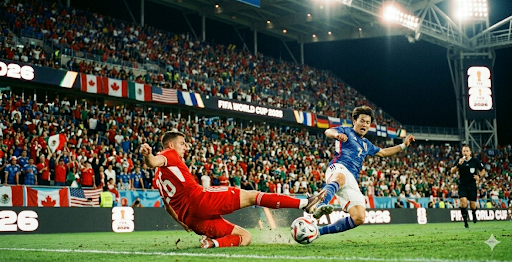
If players slip, arrive late, or misjudge the ball, tackles can become messy. A fast or slick pitch can create transition fouls. A heavy pitch can make players late into challenges.
Cards become more interesting when pitch issues combine with:
- Fast attackers
- Tired defenders
- Strict referee
- Wet surface
- High-pressure match state
- Late-game chasing
But pitch quality alone is not enough.
A rough pitch with no pressure may not create many cards.
A slick pitch with wingers constantly attacking defenders?
That’s different.
Surface plus pressure plus referee style is the stronger card formula.
How Can Pitch Quality Affect Corners?
Pitch quality can also affect corners.
If defenders do not trust the surface, they may clear early instead of playing out. If crosses skid or bounce awkwardly, blocks and rushed clearances can increase. If goalkeepers punch instead of catch, pressure can build.
I’d look for corner value when:
- Wide attacks continue
- Crosses are blocked
- Defenders clear in panic
- Goalkeepers punch under pressure
- One team gets pinned deep
- The pitch creates rushed decisions
Corners are not just a weather or surface market.
They are a pressure market.
Pitch quality matters when it creates that pressure.
How Can Live Betting Confirm Pitch Quality Impact?
Live betting is the best way to use pitch quality.
Before kickoff, you may know the surface type and weather. Live, you can see the actual field behavior.
After 10 to 15 minutes, I’d ask:
- Are players slipping?
- Are passes rolling normally?
- Are first touches clean?
- Is the ball bouncing awkwardly?
- Are goalkeepers comfortable?
- Are teams avoiding risky buildup?
- Did the live market adjust?
If the pitch plays normally, move on.
If the pitch is clearly changing the match, check which markets are slow to react.
Maybe player prop unders. Maybe cards. Maybe corners. Maybe goalkeeper saves. Maybe live totals.
The pitch has to prove the angle.
Don’t force it.
What Are The Biggest Pitch Quality Betting Mistakes?
The biggest mistake is trying to predict injuries directly.
That is not a reliable betting strategy.
Other mistakes include:
- Betting from surface label alone
- Ignoring live footing
- Ignoring weather and roof setup
- Betting player props from averages only
- Assuming bad pitch always means under
- Ignoring goalkeeper handling
- Ignoring referee style
- Ignoring substitutions
- Forgetting the price
That last one matters most.
A pitch-quality angle only creates value if the market has not priced it correctly.
Good read. Bad number.
Pass.
What Is A Simple Pitch Quality Betting Checklist?
Here’s the quick process I’d use.
First, identify the surface type and stadium setup.
Next, check weather, roof status, pitch wear, drainage, and match load.
Then watch the first 10 to 15 minutes.
Are players moving normally? Is the ball rolling cleanly? Are goalkeepers comfortable?
After that, match the pitch read to markets. Player props, totals, cards, corners, saves, substitutions, live betting, or no bet.
Then check price.
If pitch quality changes the match more than the market suggests, maybe there’s value.
If not, pass.
No forced injury-risk bets.
Where To Go Next
If you want to finish the venue section with altitude comparison, read World Cup Venue Altitude Vs Sea Level Performance next. It breaks down how high-altitude venues and sea-level venues can affect stamina, ball movement, team adaptation, props, totals, and live betting value.
Before you bet the World Cup, check Shurzy’s Predictions for the best betting angles and value plays.
FAQ
Does Pitch Quality Affect World Cup Betting?
Yes. Pitch quality can affect ball movement, footing, player props, substitutions, cards, corners, goalkeeper handling, totals, and live betting value.
Should Bettors Try To Predict Injuries From Pitch Quality?
No. It is better to use pitch quality as a performance, movement, substitution, and prop-risk angle instead of trying to predict specific injuries.
Does Artificial Turf Increase Injury Risk?
The research is mixed. Older studies raised concerns, while newer review work has found lower overall injury incidence on artificial turf than grass in football data. Bettors should avoid simple surface myths. (PMC)
Can Pitch Quality Affect Player Props?
Yes. Pitch quality can affect shots, crosses, passing, tackles, cards, saves, clearances, and substitution risk.
What Is The Biggest Pitch Quality Betting Mistake?
The biggest mistake is betting from surface or injury fear alone without checking live footing, ball movement, team style, player roles, and price.

Minimum Juice. Maximum Profits.
We sniff out edges so you don’t have to. Spend less. Win more.


RELATED POSTS
Check out the latest picks from Shurzy AI and our team of experts.