World Cup ROI Optimization Strategy
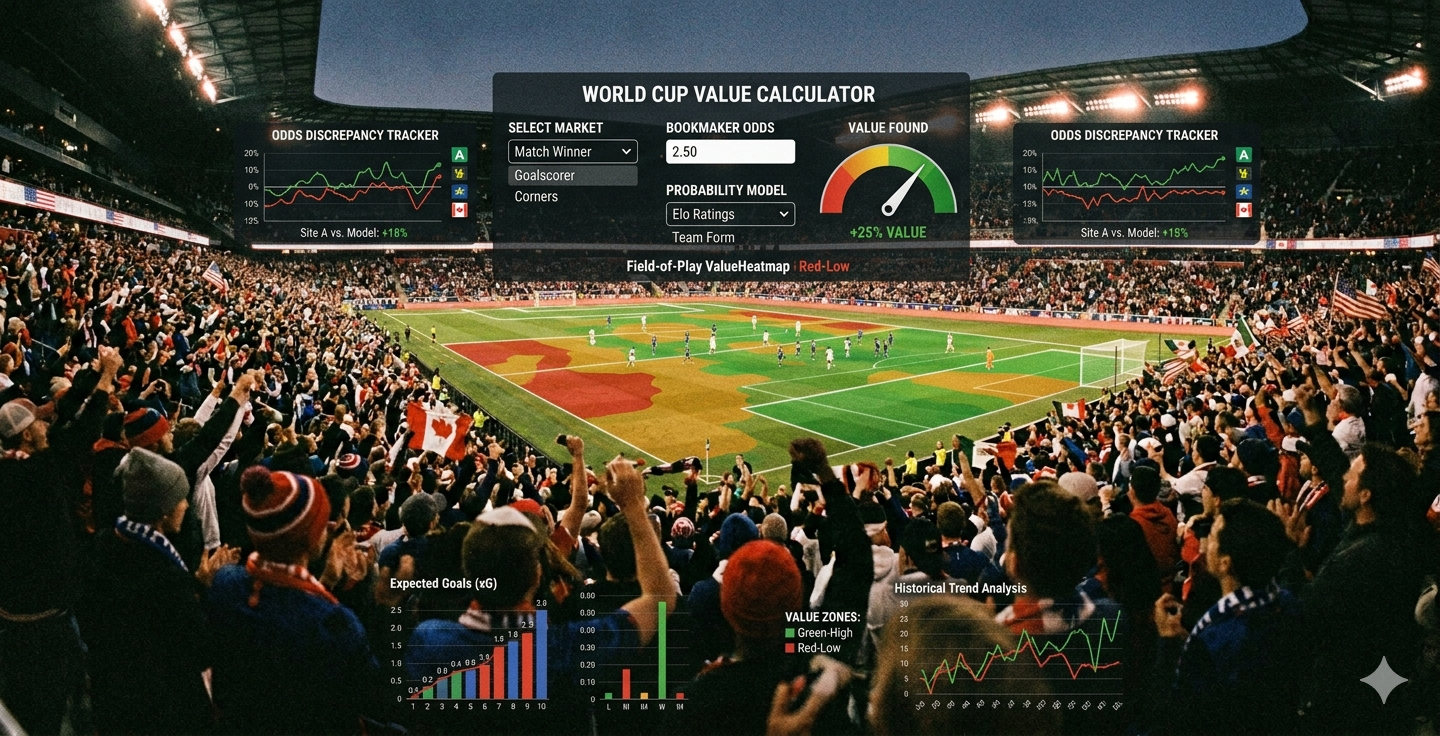
World Cup betting ROI sounds serious. Almost too spreadsheet-y. But it’s really simple. Are your bets giving you a better return than the risk you’re taking? That’s the whole game. This guide breaks down how I’d optimize ROI during the World Cup. Not by betting more. By betting cleaner, tracking better, choosing sharper markets, and cutting the random stuff that quietly drains your bankroll.


Key Insights
- Quick Answer: World Cup ROI optimization means improving the return you get from your total betting stake across the tournament.
- Best Way To Get Better Results: Track every bet, shop for better prices, and focus on markets where you have a real edge.
- Biggest Advantage: You stop judging success by single wins and start improving the full tournament betting process.
What Does ROI Mean In World Cup Betting?
ROI means return on investment.
In betting, it measures how much profit or loss you make compared with how much you staked.
Simple version:
If you bet $1,000 across the World Cup and profit $100, your ROI is 10%.
For the bigger picture, start with Advanced World Cup Betting Strategy Guide 2026. That pillar guide should be your base for value betting, bankroll control, market timing, and advanced World Cup betting angles.
This matters because the 2026 World Cup is going to have a huge betting board. FIFA lists the tournament as a 48-team event with 104 fixtures, which means more matches, more props, more futures, and more ways to either find value or get sloppy.
More bets do not automatically mean more ROI.
Actually, more bets can destroy ROI if you start forcing action.
The goal is not to bet every match.
The goal is to make better bets than the prices suggest.
That’s ROI thinking.
Looking to get an edge throughout the entire World Cup?
Check out Shurzy’s Predictions tool for data-backed picks, matchup insights, and betting angles across every stage of the tournament. Whether it’s group matches or knockout rounds, this is where smart bettors find value.
Why Do Bettors Misread ROI?
Bettors misread ROI because they focus too much on wins and losses.
Winning a bet feels good. Losing feels bad. But one result does not tell you much.
A good bet can lose. A bad bet can win.
Annoying, but true.
ROI looks at the bigger picture. It asks whether your full betting process is profitable over many bets.
That means you need to track:
- Total amount staked
- Total profit or loss
- Market type
- Odds taken
- Closing line
- Stake size
- Bet result
- Reason for the bet
Most bettors skip this.
They remember the bad beats. They remember the big wins. They forget the random props they clicked because they were bored.
Those small leaks matter.
A few bad prices. A few forced live bets. A few oversized parlays.
There goes the ROI.
How Do You Calculate Betting ROI?
The formula is simple.
Profit divided by total amount staked, then multiplied by 100.
So if you staked $2,000 across the tournament and made $160 profit, your ROI is 8%.
If you staked $2,000 and lost $100, your ROI is -5%.
That number helps you judge performance better than just saying, “I won 18 bets.”
Because winning percentage alone can mislead you.
A bettor can win many small heavy-favorite bets and still lose money. Another bettor can win fewer bets at better odds and make profit.
So I’d track both:
- Win rate
- ROI
Win rate tells you how often you win.
ROI tells you whether the wins are worth the risk.
That second one matters more.
How Does Risk Management Improve ROI?
Risk management protects ROI from big mistakes.
That’s why World Cup Risk Management For Advanced Bettors fits naturally here. Risk management controls bankroll, exposure, staking, and emotional betting. ROI optimization builds on that by asking which bets actually produce the best return.
Without risk management, ROI can get wrecked fast.
You may have a good edge overall, then destroy it with one oversized live bet.
Brutal.
Risk management helps ROI by:
- Keeping stake sizes consistent
- Avoiding chase bets
- Limiting exposure per match
- Reducing correlated overload
- Protecting futures positions
- Keeping bankroll available for better spots
- Preventing emotional betting
The boring stuff matters.
A clean staking plan may not feel exciting, but it keeps one bad match from wiping out a week of good decisions.
That is ROI protection.
Want better World Cup bets?
Use Shurzy’s Predictions tool for data-driven picks and insights.
How Can Market Selection Improve ROI?
Market selection is one of the easiest ways to improve ROI.
You do not need to bet every market.
You need to find the markets where your read is strongest.
Some bettors are better at sides and totals. Others are sharper with player props. Some read live markets well. Others do better with futures and bracket paths.
The World Cup gives you everything:
- Match odds
- Totals
- Team totals
- Player props
- Cards
- Corners
- Futures
- Group markets
- To-advance markets
- Live betting
Do not treat them equally.
If your player prop reads are strong but your futures are weak, adjust. If you keep losing live bets because you panic-click, reduce live volume. If cards and corners are profitable, track why.
ROI improves when you stop forcing markets you do not read well.
No ego.
Just data.
How Does Line Shopping Boost ROI?
Line shopping is huge.
Getting +120 instead of +110 may not feel massive on one bet. But across a full World Cup, small price differences add up.
Same pick. Better number. Higher ROI.
That’s the easiest edge most bettors ignore.
Line shopping means comparing odds across multiple sportsbooks before placing a bet. You are not changing your opinion. You are just getting paid better if you are right.
That matters in:
- Futures
- Player props
- Match odds
- Totals
- Cards
- Corners
- Live markets
A bettor who always takes the first number is usually giving away value.
And giving away value kills ROI.
If you can improve price without changing your bet, do it.
Every time.
That’s not fancy.
That’s just smart.
How Do You Use Closing Line Value For ROI?
Closing line value, or CLV, means you beat the final market price before kickoff.
Example: you bet a team at +130. It closes at +105. You got a better number than the market later offered.
That does not guarantee the bet wins.
But over time, consistently beating the closing line is usually a good process signal.
For the World Cup, CLV can help you review timing.
Are you betting early and getting good numbers? Are you waiting too long and taking stale prices? Are you chasing public moves after value disappears?
I’d track:
- Odds when you placed the bet
- Closing odds
- Whether you beat the close
- Result
- Market type
- Reason for timing
CLV is not perfect.
But it helps you separate good process from short-term results.
And that helps ROI over the full tournament.
How Can Bet Tracking Improve ROI?
Bet tracking is annoying.
Do it anyway.
If you don’t track, you’re guessing.
A simple tracker can show which markets help you and which markets hurt you. Maybe your pre-match totals are strong. Maybe your anytime goal scorer props are bleeding. Maybe your live bets are good only when you wait 15 minutes.
You won’t know unless you track.
At minimum, record:
- Date
- Match
- Market
- Odds
- Stake
- Result
- Profit or loss
- Closing line
- Short reason for bet
That last one is important.
Write one sentence explaining the bet.
If the reason sounds weak later, good. You learned something.
“Vibes” is not a reason.
“Favorite pressure plus opponent cards over at good price” is better.
Tracking makes your leaks visible.
Visible leaks can be fixed.
How Can Live Betting Hurt ROI?
Live betting can be great.
It can also destroy ROI faster than anything else.
Why? Because it is emotional and fast.
A goal happens. You react. A red card hits. You click. A team misses two chances. You chase the over. Suddenly your clean pre-match plan is gone.
Live betting hurts ROI when:
- You chase losses
- You bet without price checking
- You overreact to goals
- You bet every exciting match
- You add correlated exposure without realizing it
- You increase stakes emotionally
- You ignore pre-set limits
Live betting helps ROI only when you use it with discipline.
Watch the match. Read the flow. Compare the live price. Then decide.
No panic-clicking.
The market is fast.
You don’t always have to be.
How Can Futures Affect ROI?
Futures can boost ROI if you grab a good price early.
They can also drag ROI down if you bet too many longshots with weak paths.
A futures bet ties up bankroll. It also may not pay for weeks. That means the price needs to be worth it.
For futures ROI, I’d ask:
- Is the price better than the true chance?
- Does the team have a real path?
- Can the ticket gain value before the final?
- Is there hedge potential?
- Am I overexposed to one bracket side?
- Is this bet just a fun longshot?
Fun longshots are fine in small amounts.
But if your futures card is full of “just in case” bets, ROI can suffer.
Be selective.
A few strong futures are better than a pile of lottery tickets.
Usually.
What Are The Biggest ROI Optimization Mistakes?
The biggest mistake is betting more instead of betting better.
Volume does not equal edge.
Other mistakes include:
- Not tracking bets
- Ignoring line shopping
- Taking bad prices on popular teams
- Overbetting live markets
- Chasing losses
- Betting too many longshot futures
- Ignoring closing line value
- Staking the same on high-risk and low-risk bets
- Judging ROI from one match or one day
That last one matters.
ROI needs sample size.
One bad day does not mean your process is broken. One hot day does not mean you’re a genius.
Track the full tournament.
Then adjust.
What Is A Simple World Cup ROI Checklist?
Here’s the quick process I’d use.
First, set your bankroll and unit size.
Next, track every bet.
Then line shop before placing anything.
After that, focus on your best markets and reduce weak ones.
Then monitor closing line value.
After each matchday, review results by market type, not just total profit.
Finally, cut the leaks.
If live betting is hurting you, reduce it. If props are working, study why. If futures are tying up too much bankroll, slow down.
ROI optimization is not one magic trick.
It is a bunch of small improvements stacked together.
Boring? Maybe.
Effective? Very.
Where To Go Next
If you want to shift from advanced bankroll work into location-based edges, read World Cup Host Nation Advantage Betting Guide 2026 next. It breaks down how host teams, home crowds, travel comfort, venue familiarity, and public hype can affect betting value.
Before you bet the World Cup, check Shurzy’s Predictions for the best betting angles and value plays.
FAQ
What Is ROI In World Cup Betting?
ROI means return on investment. It measures your profit or loss compared with the total amount you staked across your bets.
How Do I Improve World Cup Betting ROI?
You can improve ROI by tracking bets, shopping for better odds, focusing on your strongest markets, controlling risk, and avoiding emotional live betting.
Is Win Rate The Same As ROI?
No. Win rate shows how often you win. ROI shows whether your wins are profitable compared with your total stake.
Why Is Line Shopping Important For ROI?
Line shopping helps you get better odds on the same bet. Over many bets, better prices can significantly improve ROI.
What Is The Biggest ROI Mistake?
The biggest mistake is betting more markets without a real edge instead of improving price, tracking, staking, and market selection.

Minimum Juice. Maximum Profits.
We sniff out edges so you don’t have to. Spend less. Win more.


RELATED POSTS
Check out the latest picks from Shurzy AI and our team of experts.