World Cup Arbitrage Betting Opportunities
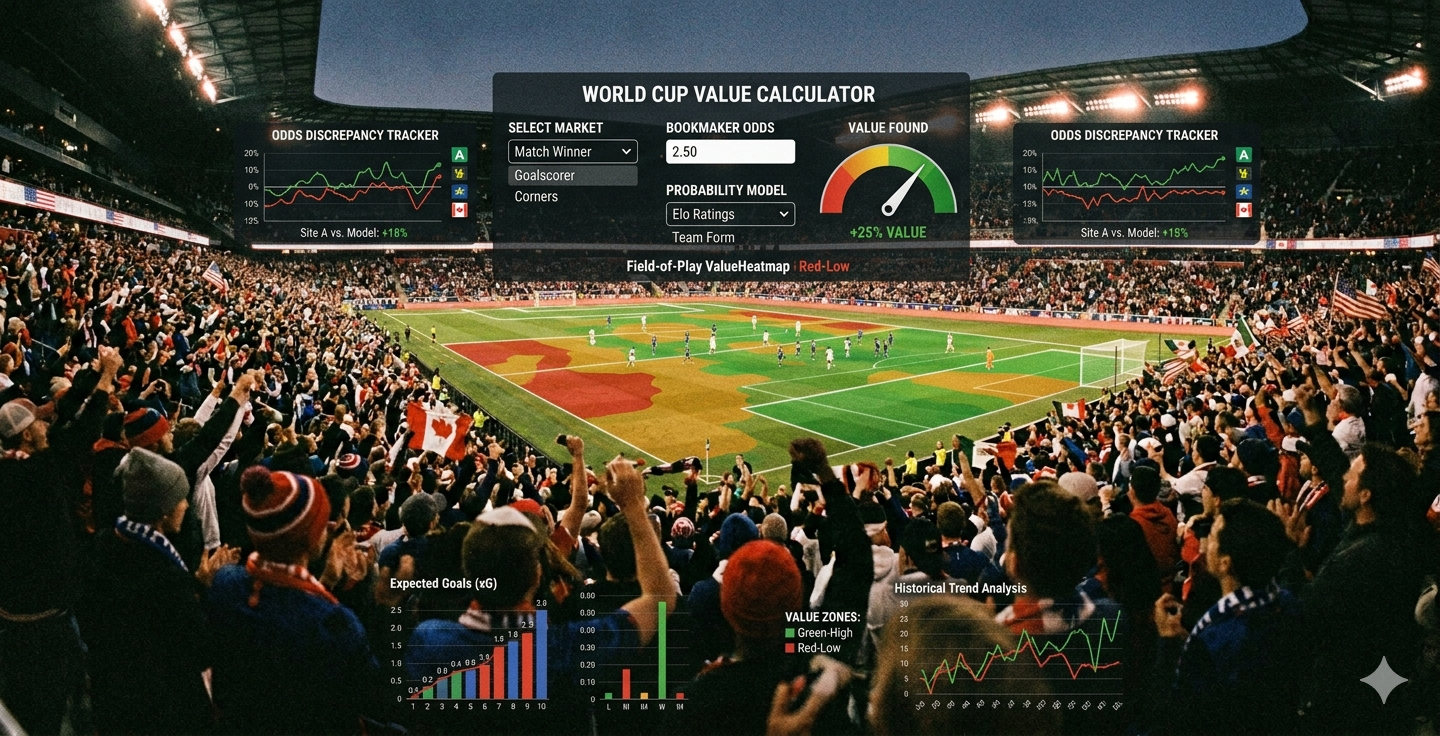
World Cup arbitrage betting sounds fancy, but the idea is pretty simple. Sometimes two sportsbooks disagree enough that you can cover different outcomes and lock in a small profit. Sounds nice, right? It can be. But it is not free money if you’re careless. Odds move fast, limits exist, and one wrong click can ruin the whole setup. This guide breaks down how I’d look for World Cup arbitrage betting opportunities. Clean, practical, and without pretending every odds gap is worth chasing.


Key Insights
- Quick Answer: Arbitrage betting happens when odds across sportsbooks allow you to bet all outcomes and lock in a profit.
- Best Way To Get Better Results: Compare multiple sportsbooks quickly and calculate the full return before placing any bet.
- Biggest Advantage: You can reduce market risk when sportsbooks disagree, especially during fast-moving World Cup odds windows.
What Is World Cup Arbitrage Betting?
World Cup arbitrage betting means placing bets on all possible outcomes of the same market at different sportsbooks so the total payout is higher than your total stake.
Simple version: the books disagree, and you try to use that gap.
For the bigger picture, start with Advanced World Cup Betting Strategy Guide 2026. That pillar guide should be your base for value betting, bankroll control, market timing, and advanced World Cup betting angles.
The 2026 World Cup will have a massive betting board because FIFA lists the tournament as a 48-team event with 104 fixtures. More matches means more odds, more markets, more sportsbook disagreement, and more potential arbitrage windows.
But here’s the catch.
Arbitrage sounds easier than it is.
You need speed. You need accounts at multiple sportsbooks. You need correct math. You need to check rules. And you need both bets placed before the odds move.
If one side changes before you finish, your “risk-free” bet can turn into a regular bet real quick.
Not ideal.
Looking to get an edge throughout the entire World Cup?
Check out Shurzy’s Predictions tool for data-backed picks, matchup insights, and betting angles across every stage of the tournament. Whether it’s group matches or knockout rounds, this is where smart bettors find value.
How Does Arbitrage Betting Work?
Arbitrage works when the implied probabilities from different sportsbook odds add up to less than 100%.
That means the market is giving you enough payout across outcomes to cover everything.
Example time.
Let’s say one sportsbook offers Team A at +110 and another sportsbook offers Team B at +110 in a two-outcome market. If the math works, you can bet both sides in the right amounts and lock a small profit.
In soccer, it can be trickier because many markets have three outcomes:
- Team A wins
- Draw
- Team B wins
That means you may need to cover all three outcomes if you are betting a 90-minute moneyline.
This is where mistakes happen.
A bettor thinks they are covered, but they forgot the draw.
Painful.
Very avoidable.
Before betting any World Cup arbitrage setup, make sure you know the exact market.
90-minute moneyline is not the same as to-advance. Regular time is not the same as match winner. Player props can have different settlement rules.
Always check the rules.
Always.
Why Can The World Cup Create Arbitrage Spots?
The World Cup can create arbitrage spots because the market is huge, public attention is high, and odds move fast.
Sportsbooks may adjust at different speeds. One book may react quickly to injury news. Another may lag. One book may shorten a public favorite. Another may hold a better number. One book may post a prop line early. Another may price it differently.
That disagreement can create arbitrage.
World Cup arbitrage windows can show up around:
- Opening lines
- Injury news
- Starting lineups
- Public money surges
- Live betting swings
- Player props
- To-advance markets
- Futures markets
- Weather or venue news
But these windows usually do not stay open long.
Once the market notices, the odds move.
So the edge is often timing.
Not just finding the gap.
Finding it, calculating it, and placing it before the market closes.
That’s the hard part.
What Markets Are Best For World Cup Arbitrage?
The cleanest arbitrage markets are usually two-outcome markets.
Why? Fewer outcomes to cover.
Examples include:
- Over/under totals
- Both teams to score: yes/no
- Team to advance
- Player props over/under
- Cards over/under
- Corners over/under
- Penalty shootout yes/no, if offered
Three-way markets can still offer arbitrage, but they are harder because you need to cover the draw too.
That includes:
- 90-minute match result
- First half result
- Group match winner markets
- Some correct stage markets
Futures arbitrage is possible too, but it is more complicated because prices change over weeks, books may limit stakes, and you may not be able to cover every outcome cleanly.
For most bettors, I’d keep arbitrage simple.
Two-outcome markets first.
Then grow from there.
No need to turn your betting card into a math headache if the profit is tiny.
How Does Futures Hedging Connect To Arbitrage?
Arbitrage and hedging are cousins.
Not twins.
Arbitrage tries to lock a profit from price differences right now. Hedging usually protects a position you already have.
That’s why World Cup Futures Hedging Strategy Advanced fits naturally here. Futures hedging helps protect a ticket as the tournament changes, while arbitrage focuses more on price gaps across books.
Example.
You bet a team to win the World Cup before the tournament. Their odds shorten after a strong group stage. You may hedge later by betting another outcome.
That is hedging.
But if two sportsbooks are offering different prices right now that let you cover outcomes for guaranteed profit, that is arbitrage.
Both can reduce risk.
But they work differently.
And both still require good math.
No vibes allowed.
Want better World Cup bets?
Use Shurzy’s Predictions tool for data-driven picks and insights.
How Do You Calculate An Arbitrage Opportunity?
The simple test is implied probability.
For positive American odds, the implied probability is:
100 / (odds + 100)
For negative American odds, it is:
absolute odds / (absolute odds + 100)
Then add the implied probabilities of all outcomes.
If the total is under 100%, there may be an arbitrage opportunity.
Example:
- Over 2.5 goals at +105
- Under 2.5 goals at +105
Each side implies about 48.8%.
Together, that is about 97.6%.
That leaves a small arbitrage margin.
Nice.
But remember, the real world is messier.
You still need to:
- Place the correct stake amounts
- Confirm both odds are still available
- Check settlement rules
- Watch for void rules
- Consider stake limits
- Account for currency or payout differences, if relevant
The math can say yes.
The sportsbook screen can still say no.
That’s arbitrage life.
What Can Go Wrong With Arbitrage Betting?
A lot, honestly.
This is where people get too excited.
Arbitrage is low-risk only when everything works. But plenty can go wrong before the full setup is placed.
Common problems include:
- Odds move before the second bet
- One sportsbook rejects or limits your stake
- You bet the wrong market
- You forget the draw
- One side gets voided
- Settlement rules differ
- Live odds suspend
- You miscalculate stake sizing
- Your account balance is not ready
That last one is underrated.
If your money is not already spread across sportsbooks, you may miss the window. Arbitrage opportunities can disappear while you are still trying to deposit.
Not fun.
Also, some books may limit bettors who constantly take stale prices or arbitrage spots.
So keep expectations realistic.
Arbitrage can be useful.
It is not magic.
How Can Line Shopping Help Find Arbitrage?
Line shopping is the habit of comparing odds across sportsbooks.
It is useful even when you are not doing arbitrage.
Actually, it is one of the easiest ways to improve betting results.
If one sportsbook has +120 and another has +135, you want +135. Simple.
Arbitrage is just the more advanced version of line shopping. Instead of just taking the best price on one side, you are checking if the best prices across outcomes create a guaranteed margin.
For World Cup betting, line shopping is especially useful because markets move fast around:
- Lineups
- Injuries
- Public favorites
- Host nation matches
- Knockout games
- Player props
- Live odds
If you are only using one book, you are probably leaving value on the table.
Maybe not every bet.
But enough over a full tournament.
How Can Live Betting Create Arbitrage Windows?
Live betting can create quick arbitrage windows because odds move at different speeds.
A goal, red card, penalty review, or injury can cause one sportsbook to suspend or adjust faster than another. For a few seconds, prices may disagree.
That can create opportunity.
But live arbitrage is risky.
Very risky.
Markets suspend. Odds change. Bets get delayed. One side may accept while the other disappears. By the time you click, the setup may be gone.
If you try live arbitrage, I’d be extra careful.
Check:
- Is the market suspended?
- Are odds still active?
- Are bets delayed?
- Can both sides be placed quickly?
- Is the profit worth the execution risk?
- Are you sure the markets settle the same way?
For most bettors, pre-match arbitrage is cleaner.
Live arbitrage can work, but it is not beginner-friendly.
That thing moves fast.
How Much Profit Should You Expect From Arbitrage?
Usually, not a lot per bet.
Arbitrage margins are often small. Think small percentages, not giant wins.
That’s okay if you are disciplined, but it also means you need to ask if the effort is worth it.
A 1% arbitrage margin may not be worth rushing, risking a mistake, or tying up funds if your stake is small.
A bigger margin may be worth action, but bigger gaps usually disappear faster or come with limits.
That’s the tradeoff.
Arbitrage is not about smashing one huge win.
It is about finding small pricing errors and executing cleanly.
Less exciting.
More technical.
Very Shurzy, honestly. Less drama, better process.
What Are The Biggest Arbitrage Betting Mistakes?
The biggest mistake is thinking arbitrage means no risk.
It reduces market risk when done correctly. But execution risk is real.
Other mistakes include:
- Forgetting the draw in soccer
- Betting different market types
- Ignoring settlement rules
- Placing one side before confirming the other
- Miscalculating stake sizes
- Chasing tiny margins too aggressively
- Ignoring sportsbook limits
- Trying live arbitrage too early
- Forgetting bankroll allocation across books
That market-type mistake is brutal.
Team to win in 90 minutes is not the same as team to advance. Over 2.5 regulation goals may not settle the same as a market that includes extra time.
Read the market title.
Then read it again.
Sounds boring.
Saves money.
What Is A Simple World Cup Arbitrage Checklist?
Here’s the quick process I’d use.
First, compare odds across multiple sportsbooks.
Next, confirm the market is exactly the same at each book.
Then calculate implied probabilities for every outcome.
After that, check if the total is below 100%.
Then calculate the correct stake for each side.
Before placing, confirm odds, limits, and settlement rules.
Then place the bets quickly and record the position.
If anything changes before both bets are placed, stop and recalculate.
No guessing.
No panic clicking.
Arbitrage only works when the math and execution are clean.
Where To Go Next
If you want to build a smarter set of bets instead of chasing one-off price gaps, read World Cup Portfolio Betting Strategy next. It breaks down how to spread risk across futures, match bets, props, live markets, and hedges throughout the tournament.
Before you bet the World Cup, check Shurzy’s Predictions for the best betting angles and value plays.
FAQ
What Is World Cup Arbitrage Betting?
World Cup arbitrage betting means using odds differences across sportsbooks to cover all outcomes of a market and lock in profit.
Is Arbitrage Betting Risk-Free?
Not fully. It can reduce market risk, but execution risk remains. Odds can move, bets can be rejected, and settlement rules can differ.
What Markets Are Best For Arbitrage?
Two-outcome markets like totals, both teams to score, player props, cards, corners, and to-advance markets are usually cleaner than three-way match result markets.
Can You Arbitrage Live World Cup Betting?
Yes, but it is harder and riskier because live odds move fast, markets suspend, and bets may be delayed or rejected.
What Is The Biggest Arbitrage Betting Mistake?
The biggest mistake is betting different market types or forgetting an outcome, especially the draw in 90-minute soccer markets.

Minimum Juice. Maximum Profits.
We sniff out edges so you don’t have to. Spend less. Win more.


RELATED POSTS
Check out the latest picks from Shurzy AI and our team of experts.