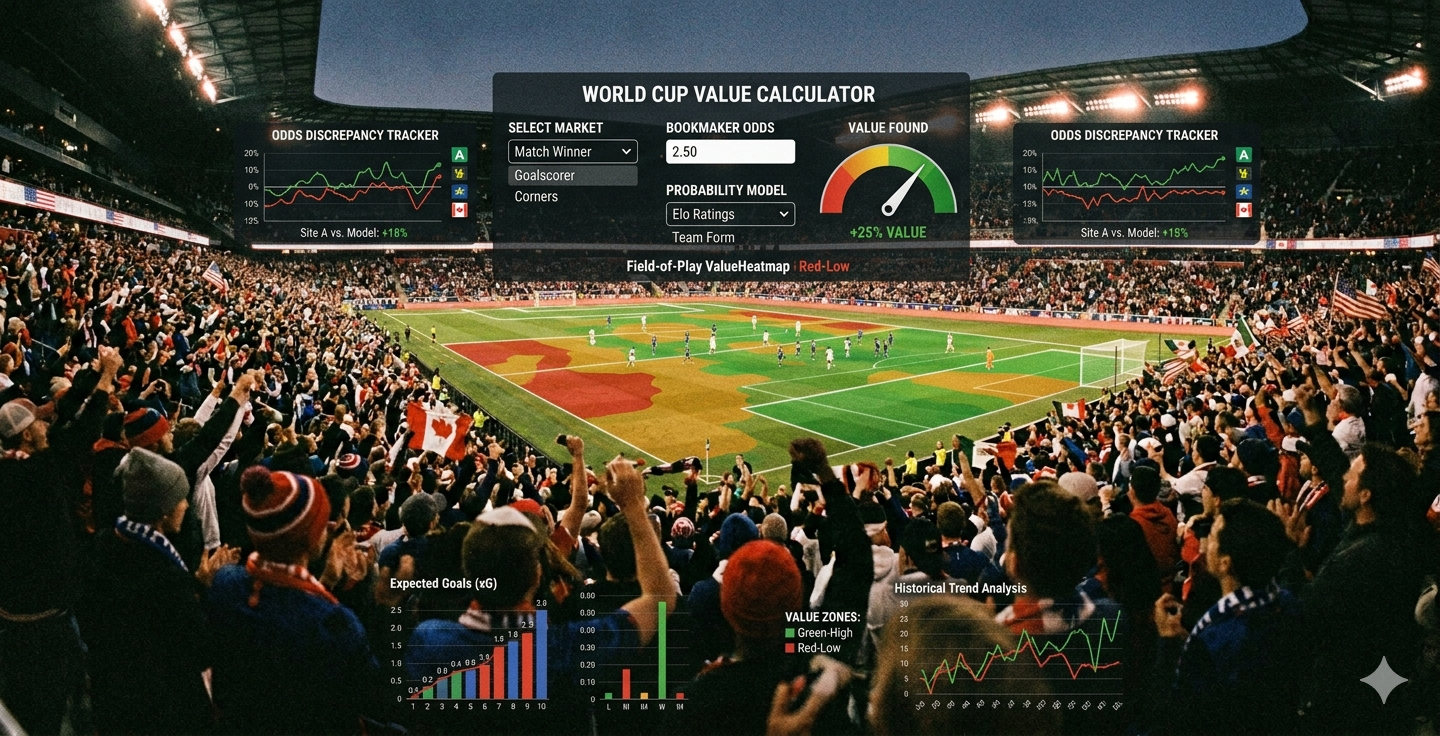
World Cup Futures Hedging Strategy Advanced
World Cup futures can feel amazing when your team makes a run. That ticket you grabbed early suddenly looks way better. Then the hard part comes. Do you let it ride? Hedge? Cash out? Bet the other side? Panic because penalties are coming? This guide breaks down how I’d handle World Cup futures hedging. Not in a complicated Wall Street way. Just a clear betting approach for protecting value, managing risk, and not making emotional decisions when the bracket gets tense.


Key Insights
- Quick Answer: Futures hedging means placing another bet later to reduce risk or lock in profit from an earlier futures position.
- Best Way To Get Better Results: Plan possible hedge points before the tournament, not when your ticket is already sweating.
- Biggest Advantage: You can protect strong futures positions without killing all the upside too early.
What Is Futures Hedging In World Cup Betting?
Futures hedging means you bet one outcome early, then place another bet later to reduce risk.
Simple example: you bet a team to win the World Cup before the tournament. They reach the semifinal. Now their futures ticket is worth more because they are closer to winning.
At that point, you can let it ride.
Or you can hedge by betting the opponent, another futures market, or a related match market.
For the bigger picture, start with Advanced World Cup Betting Strategy Guide 2026. That pillar guide should be your base for value betting, bankroll control, market timing, and advanced World Cup betting angles.
Here’s the key thing.
Hedging is not always the “right” move.
Sometimes it protects profit. Sometimes it cuts your best ticket too early. Sometimes it feels safe but gives away too much value.
That’s why I don’t like hedging from fear.
I like hedging from a plan.
Big difference.
Looking to get an edge throughout the entire World Cup?
Check out Shurzy’s Predictions tool for data-backed picks, matchup insights, and betting angles across every stage of the tournament. Whether it’s group matches or knockout rounds, this is where smart bettors find value.
Why Should You Hedge A World Cup Futures Bet?
You hedge when your original futures ticket has gained value and you want to manage risk.
That’s the clean answer.
Maybe your team is one match away from the final. Maybe the bracket opened up. Maybe their odds shortened hard. Maybe the matchup is dangerous, and you do not want one bad bounce to wipe out the whole position.
Hedging can help you:
- Lock in some profit
- Reduce downside
- Manage emotional pressure
- Protect against penalties or extra time
- Balance a futures portfolio
- Avoid losing everything after a strong run
But hedging also has a cost.
When you hedge, you usually lower your maximum payout.
So the question is not, “Should I always hedge?”
No.
The better question is, “Does hedging improve my position at this price?”
That’s where smarter bettors separate themselves.
When Should You Avoid Hedging?
Avoid hedging when the hedge price is bad or when your original bet still has strong value.
This happens a lot.
A bettor gets nervous, sees a possible payout, and hedges just because the match feels scary. But if the hedge bet is overpriced, you may be paying too much for comfort.
Comfort is nice.
Bad price is not.
I would avoid hedging when:
- The hedge line is too expensive
- Your original team still has value
- You are hedging only because of nerves
- The payout change is too small to matter
- You do not understand the market you are using
- You are killing most of the upside too early
This is where honesty matters.
Are you hedging because it is smart?
Or because you are scared?
No judgment. We’ve all been there.
But fear is not a strategy.
What Are The Main Ways To Hedge Futures?
There are a few ways to hedge World Cup futures.
The most direct way is betting the opponent in a knockout match. If your futures team reaches the semifinal, you can bet the other team to advance or win in 90 minutes, depending on what you want to protect.
You can also hedge with:
- Opponent moneyline
- Opponent to advance
- Draw after 90 minutes
- Double chance
- Other team futures
- Final matchup markets
- Tournament winner markets
- Live betting
- Cash-out, if available
Each one behaves differently.
A 90-minute hedge is not the same as a to-advance hedge. If your futures team loses in extra time, a 90-minute opponent moneyline may not protect you.
Painful.
So before placing a hedge, make sure the market actually covers the risk you want to reduce.
That sounds basic.
But it saves money.
How Does Bracket Positioning Affect Hedging?
Bracket positioning can decide when your futures ticket becomes more valuable.
That’s why World Cup Bracket Positioning Betting Strategy fits naturally here. Bracket position helps you see whether your team has a softer route, a brutal matchup coming, or a spot where hedging makes sense.
If your team lands in a clean bracket lane, you may not want to hedge too early. The ticket has room to grow.
If your team lands in a brutal matchup earlier than expected, you may want to reduce exposure before the risk gets ugly.
Bracket positioning can affect:
- When to hedge
- How much to hedge
- Which market to use
- Whether to hold
- Whether to add another futures position
- Whether to use live betting instead
A good hedge starts before the panic.
I like mapping possible hedge points before the knockout stage.
Quarterfinal. Semifinal. Final. Maybe even Round of 32 if the path is rough.
That way, I’m not making decisions with my heart in my throat.
Want better World Cup bets?
Use Shurzy’s Predictions tool for data-driven picks and insights.
How Do You Decide How Much To Hedge?
The amount depends on your goal.
Do you want to lock in profit no matter what? Do you want to reduce risk but keep most of the upside? Do you only want to get your original stake back?
Those are different plans.
Common hedge goals include:
- Recover the original stake
- Lock small guaranteed profit
- Create equal profit on both sides
- Reduce loss if the futures team loses
- Keep most upside but lower stress
Personally, I don’t always like full hedges.
A full hedge can make sense if the payout is big and the final risk is too high for your bankroll. But if your original ticket is strong, I may prefer a partial hedge.
That gives you protection without killing the ticket.
Example: instead of locking equal profit, maybe you hedge just enough to cover your stake plus a small win.
Then if your futures team wins, you still get a strong payout.
Clean. Controlled. Not too scared.
How Can Live Betting Help With Futures Hedging?
Live betting can be a useful hedge tool because it lets you react after the match starts.
Pre-match hedges are cleaner. You know the price. You make the move. Done.
But live hedging can be smarter if you want to see how the matchup looks first.
Maybe your futures team starts strong. No need to hedge yet. Maybe they look awful after 15 minutes. Now a live hedge might make sense.
Live hedging can help when:
- The pre-match hedge price feels bad
- You want to confirm match flow
- Your team starts slow
- The opponent creates real chances
- A red card changes everything
- Extra time risk increases
- The market overreacts to a goal
But live betting is dangerous if you panic.
A goal hits, odds move, and suddenly you’re clicking like your mouse owes you money.
Slow down.
A live hedge should still be priced well.
Not just emotionally available.
How Does Extra Time And Penalty Risk Affect Hedging?
Extra time and penalties are huge for futures hedging.
A strong team can be better for 120 minutes and still lose a shootout. That’s the painful part of knockout betting.
If your futures team is entering a match with high draw, extra time, or penalty risk, hedging may become more attractive.
But make sure the hedge matches the risk.
If you are worried your team loses in penalties, a 90-minute opponent moneyline may not help. You may need the opponent to advance, or another market that covers extra time and penalties.
This is where bettors mess up.
They think they hedged.
Then the match goes to penalties and their hedge does nothing.
Brutal.
Always check settlement rules.
Always.
How Should You Hedge Before The Final?
The final is the most common hedge spot.
By then, your futures ticket has already survived the whole tournament. One match left. Big payout possible. Big risk too.
Before hedging the final, I’d ask:
- How big is the original futures payout?
- How much profit do I want guaranteed?
- Is the opponent price fair?
- Is my team still undervalued?
- Is extra time or penalty risk high?
- Would I regret not hedging?
- Would I regret hedging too much?
That regret question sounds emotional, but it matters.
Betting is still human.
If the payout is life-changing for your bankroll, protecting some of it makes sense. If the payout is nice but not huge, maybe you let more ride.
No one rule fits everyone.
The right hedge depends on bankroll, risk tolerance, and price.
What Are The Biggest Futures Hedging Mistakes?
The biggest mistake is waiting until panic decides for you.
Bad idea.
Other mistakes include:
- Hedging too early
- Hedging too much
- Hedging with the wrong market
- Ignoring extra time and penalties
- Using cash-out without checking value
- Hedging only because of fear
- Refusing to hedge because of ego
- Forgetting the original reason for the bet
- Not planning before the knockout stage
The cash-out one is important.
Cash-out can be convenient, but it is not always the best price. Sportsbooks offer it because it serves them too.
So before accepting cash-out, compare it with what you could create through your own hedge.
Sometimes cash-out is fine.
Sometimes it’s expensive convenience.
What Is A Simple Futures Hedging Checklist?
Here’s the quick process I’d use.
First, write down your original futures position. Stake, odds, payout, and reason for the bet.
Next, map likely hedge points. Round of 16, quarterfinal, semifinal, final, or live only.
Then decide your goal. Cover stake, lock profit, reduce risk, or keep upside.
After that, choose the right hedge market. Opponent to advance, 90-minute market, double chance, live hedge, or another futures position.
Then check price.
If the hedge improves your risk without giving away too much value, maybe do it.
If the hedge is bad or emotional, pass.
The goal is not to remove all risk.
The goal is to manage risk better.
Where To Go Next
If you want to find pricing gaps across sportsbooks, read World Cup Arbitrage Betting Opportunities next. It breaks down how arbitrage, odds differences, line shopping, and market timing can create low-risk betting opportunities when prices don’t match.
Before you bet the World Cup, check Shurzy’s Predictions for the best betting angles and value plays.
FAQ
What Is Futures Hedging In World Cup Betting?
Futures hedging means placing another bet later to reduce risk or lock in profit from an earlier futures bet.
Should I Always Hedge A Futures Bet?
No. Hedging is useful when it improves your risk position, but it can also reduce upside if done too early or at a bad price.
What Is The Best Way To Hedge A World Cup Futures Bet?
The best hedge depends on your goal. You can use opponent to advance, 90-minute markets, live betting, or other futures positions.
Should I Use Cash-Out For Futures Bets?
Sometimes, but compare the cash-out offer with your own hedge options first. Cash-out can be convenient, but it may not offer the best value.
What Is The Biggest Futures Hedging Mistake?
The biggest mistake is hedging emotionally without checking the market, settlement rules, extra time risk, and whether the hedge price is fair.

Minimum Juice. Maximum Profits.
We sniff out edges so you don’t have to. Spend less. Win more.


RELATED POSTS
Check out the latest picks from Shurzy AI and our team of experts.