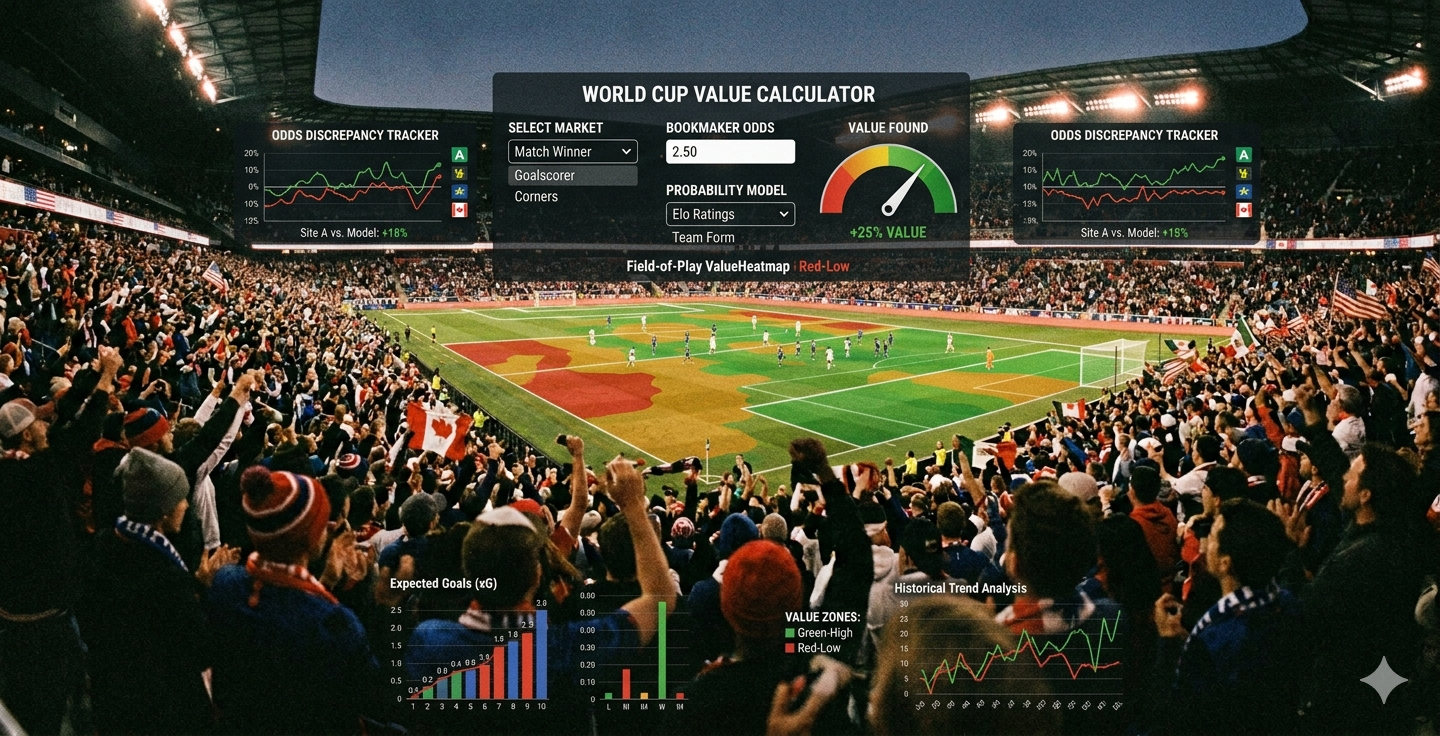
World Cup Host Country Performance Trends And Betting Angles
Host countries always come with a story. The crowd is louder, the pressure is heavier, and bettors start asking the same thing: can the home team make a run? Sometimes that story is real. Sometimes it turns into overpriced hype. This guide breaks down how I’d use host country performance trends in World Cup betting. History, crowd energy, public bias, market movement, and the big rule: trends are useful, but price still decides the bet.


Key Insights
- Quick Answer: Host country trends can help bettors understand market bias, but they should never replace current team quality and price.
- Best Way To Get Better Results: Compare historical host performance with today’s matchup, odds movement, squad strength, and public betting.
- Biggest Advantage: You avoid blindly betting host narratives and start spotting when the market overreacts to history.
Why Do Host Country Performance Trends Matter?
Host country performance trends matter because host teams often get treated differently by bettors.
There’s more attention. More emotion. More national pride. More media coverage. More casual money.
For the bigger picture, start with Advanced World Cup Betting Strategy Guide 2026. That pillar guide should be your base for value betting, bankroll control, market timing, and advanced World Cup betting angles.
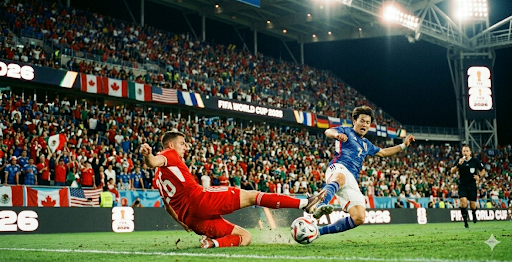
The 2026 World Cup will have three host countries: Canada, Mexico, and the United States. FIFA lists the tournament as a 48-team event with 104 matches across 16 host cities, so bettors will see multiple host-country storylines instead of just one home team narrative.
That changes the read.
In older tournaments, “the host” usually meant one country. In 2026, the host story is split across three teams, three fan bases, three travel setups, and different venue conditions.
So I would not treat host performance trends like a simple rule.
The better approach is this:
Use history as context, then price the current team.
Because Uruguay in 1930, France in 1998, South Korea in 2002, Russia in 2018, and Qatar in 2022 do not tell you the same thing.
Different teams. Different formats. Different betting markets.
Same idea: context matters.
Looking to get an edge throughout the entire World Cup?
Check out Shurzy’s Predictions tool for data-backed picks, matchup insights, and betting angles across every stage of the tournament. Whether it’s group matches or knockout rounds, this is where smart bettors find value.
What Does History Say About Host Countries?
History does show that host countries can overperform.
But it does not say every host is a good bet.
Several host nations have won the World Cup, including Uruguay in 1930, Italy in 1934, England in 1966, West Germany in 1974, Argentina in 1978, and France in 1998. That’s the trend bettors usually remember. (Wikipedia)
But that list needs context.
Many of those teams were already strong. Some were tournament favorites or close to it. They did not win only because they hosted.
There are also host countries that made solid runs without winning. Brazil reached the final as host in 1950, Sweden reached the final as host in 1958, Germany finished third as host in 2006, and Brazil finished fourth as host in 2014. (Opta Analyst)
So what’s the actual lesson?
Hosting can help.
But it does not turn an average team into a guaranteed contender.
That’s where bettors get into trouble.
Why Can Historical Host Trends Be Misleading?
Historical host trends can mislead bettors because the World Cup changes over time.
The format changes. Travel changes. Squad depth changes. Betting markets change. Home advantage changes. Public betting gets sharper and louder.
A host trend from decades ago may not apply cleanly to today.
Also, host strength varies a lot.
A host like France in 1998 is not the same as a weaker host just hoping to survive the group stage. A team with elite players, depth, and strong tactics may use home advantage as a real boost. A team with shaky defense and limited scoring may still struggle, even at home.
That’s why I’d avoid lazy trend betting.
Bad trend read:
“Hosts usually do well, so bet the host.”
Better trend read:
“Hosts can get emotional and market support, so check if the odds have moved too far.”
The second version is actually useful.
The first version is how you overpay.
How Do Host Trends Affect Public Betting?
Host trends can pull public money toward the home side.
Casual bettors know the story. Home crowd. National pride. Familiar venues. Momentum. Historic host runs.
It all sounds good.
Sportsbooks know that too.
That means host teams may get shorter prices than their true chance deserves, especially in popular markets like:
- Host moneyline
- Host to qualify
- Host group winner
- Host player goal scorer props
- Host team totals
- Host futures
- Host live comeback bets
None of these are automatically bad.
But they are dangerous if the market is inflated.
The host team might still win. The problem is whether the price is worth it.
That’s the part I care about.
If everyone wants the home story, I want to know if I’m paying extra for it.
Usually, yes.
Sometimes, too much.
How Does Home Crowd Impact Connect To Host Trends?
Home crowd impact is one of the biggest reasons host teams get attention.
That’s why How Home Crowd Impact Affects World Cup Betting fits naturally here. Crowd impact explains how stadium energy can affect tempo, pressure, referee perception, cards, corners, and live odds.
But the crowd does not cash bets by itself.
A loud crowd can lift a team. It can also make players tense. It can push early pressure. It can also create overreaction in the live market.
For host-country trend betting, I’d ask:
- Does the crowd create real pressure?
- Is the host creating clean chances?
- Is the opponent rattled or calm?
- Did the odds move because of the crowd story?
- Are cards or corners better than the side?
- Is the market overreacting live?
The crowd is part of the trend.
Not the whole bet.
A home crowd plus real chance quality is interesting.
A home crowd plus weak shots and bad prices?
No thanks.
Want better World Cup bets?
Use Shurzy’s Predictions tool for data-driven picks and insights.
How Should Bettors Compare The 2026 Host Teams?
For 2026, bettors need to separate Canada, Mexico, and the United States.
Do not group them into one “host advantage” bucket.
Each host team has a different profile, fan base, pressure level, travel setup, and market perception. They may also benefit differently depending on where they play.
The 2026 setup includes 16 host cities across Canada, Mexico, and the United States. FIFA’s host city list makes it clear this tournament is spread across a wide North American map, not one compact host country. (FIFA)
So I’d compare host teams by:
- Squad quality
- Group draw
- Venue location
- Travel schedule
- Climate comfort
- Fan support
- Market hype
- Player prop pricing
- Path after the group stage
Mexico may have a different type of host edge than Canada. The United States may have a different public betting profile than both.
Same tournament.
Three host stories.
Price them separately.
How Can Host Trends Affect Group Stage Bets?
Host trends can matter early in the group stage because public emotion is high.
Opening matches can be especially noisy. Fans are excited. Media coverage is heavy. Bettors want the home side to start strong.
That can affect prices before kickoff and live.
For group-stage host bets, I’d check:
- Is the host team favored fairly?
- Is the draw being ignored?
- Is the opponent being underrated?
- Is the host under pressure to attack?
- Is the total inflated by hype?
- Are host player props too short?
A host team may start fast because of crowd energy.
Or it may start nervous because of pressure.
That’s why live betting can help. After 10 to 15 minutes, you can see whether the host is using the crowd well or forcing the issue.
Do not assume.
Watch.
Then price it.
How Can Host Trends Affect Knockout Bets?
If a host team reaches the knockout stage, the market can get even more emotional.
Now the story gets bigger.
“Can they make a run?”
“Can the home crowd carry them?”
“Is this their moment?”
Cool story. Maybe true.
But knockout betting has different rules. Extra time, penalties, draw after 90 minutes, tactical caution, and pressure all matter.
A host team can be more likely to advance than win in regulation. A host favorite can dominate crowd energy but still struggle to break down a compact opponent.
So in knockouts, I’d separate:
- 90-minute market
- To advance
- Draw
- Extra time
- Penalties
- Cards
- Corners
- Player props
Host trend does not automatically mean moneyline.
Sometimes the better angle is to advance. Sometimes it’s corners. Sometimes it’s cards. Sometimes the best bet is fading the public hype.
Again.
Price first.
Story second.
How Can Host Trends Affect Player Props?
Host player props can be dangerous because the public loves names and narratives.
A host star to score? Easy click.
A host winger shots over? Fun.
A host player to score first? Very tempting.
But those markets can get inflated fast.
Before betting host props, I’d ask:
- Is the player’s role strong?
- Is he starting?
- Is he on penalties?
- Is he on set pieces?
- Is the matchup favorable?
- Did public money shorten the price?
- Is a teammate better value?
Host trend can also create value on the other side.
If the host is expected to dominate but the opponent is dangerous, maybe the opponent goalkeeper saves prop is not the right read. Maybe opponent counters create shots. Maybe host defenders face card risk if they push too high.
Do not only look at host attacking props.
The full prop board can move around the host story.
How Can Host Country Trends Help Live Betting?
Live betting is where host trends either show up or disappear.
Pre-match, the story is loud.
Live, the match tells the truth.
I’d watch:
- Is the host pressing with control?
- Are chances clean?
- Is the opponent shaken?
- Is the referee reacting to crowd pressure?
- Are corners building naturally?
- Is the live price moving too fast?
- Is the host getting nervous after missed chances?
This is especially important if the host starts strongly.
A fast start can create real value if the market is slow. But if the market moves too far because the stadium is loud, the value may be gone.
I’ve said it before, but it fits perfectly here:
Don’t bet the noise.
Bet the match.
What Are The Biggest Host Trend Betting Mistakes?
The biggest mistake is using history like a guarantee.
Hosts have had great runs before.
That does not mean this host team is automatically value today.
Other mistakes include:
- Betting hosts only because past hosts overperformed
- Ignoring current squad quality
- Ignoring opponent matchup
- Overpaying for host moneylines
- Betting host player props at public prices
- Treating Canada, Mexico, and the United States the same
- Ignoring travel and venue differences
- Confusing crowd noise with chance quality
- Forgetting the current price
That last one is the whole thing.
Historical trends can guide your thinking.
They should not place the bet for you.
What Is A Simple Host Country Trend Checklist?
Here’s the quick process I’d use.
First, identify the host trend. Is the market leaning into history, crowd, emotion, or public hype?
Next, check the actual team. Is the host strong enough to justify the price?
Then check the opponent. Is there a tactical mismatch the market is missing?
After that, check odds movement. Did the host price shorten too much?
Then choose the best market. Moneyline, draw, team total, player prop, corners, cards, live betting, or no bet.
Finally, check live if possible.
If the host trend is backed by real performance and the price is fair, maybe there’s a bet.
If it’s just nostalgia and noise, pass.
No need to bet history at a bad number.
Where To Go Next
If you want to compare host and non-host performance more directly, read Home Vs Away Performance In The World Cup 2026 next. It breaks down how home-like conditions, travel, crowd support, and neutral settings can affect betting value.
Before you bet the World Cup, check Shurzy’s Predictions for the best betting angles and value plays.
FAQ
Do World Cup Host Countries Usually Perform Better?
Host countries have often performed well, and several have won the tournament, but each host team still needs to be judged by current quality, matchup, path, and price.
Should I Bet Host Teams Because Of Historical Trends?
Not automatically. Historical trends can add context, but they should not override current odds, team strength, opponent quality, and market movement.
Can Host Country Trends Affect Public Betting?
Yes. Host narratives can attract public money, which may shorten moneylines, futures, goal scorer props, and team totals.
Are Canada, Mexico, And The United States The Same Host Betting Angle?
No. Each 2026 host country has a different team profile, venue setup, crowd dynamic, and betting market perception.
What Is The Biggest Host Trend Betting Mistake?
The biggest mistake is betting the host because of history or emotion without checking the current matchup, performance level, market movement, and price.

Minimum Juice. Maximum Profits.
We sniff out edges so you don’t have to. Spend less. Win more.


RELATED POSTS
Check out the latest picks from Shurzy AI and our team of experts.