World Cup Multi-Market Correlation Strategy
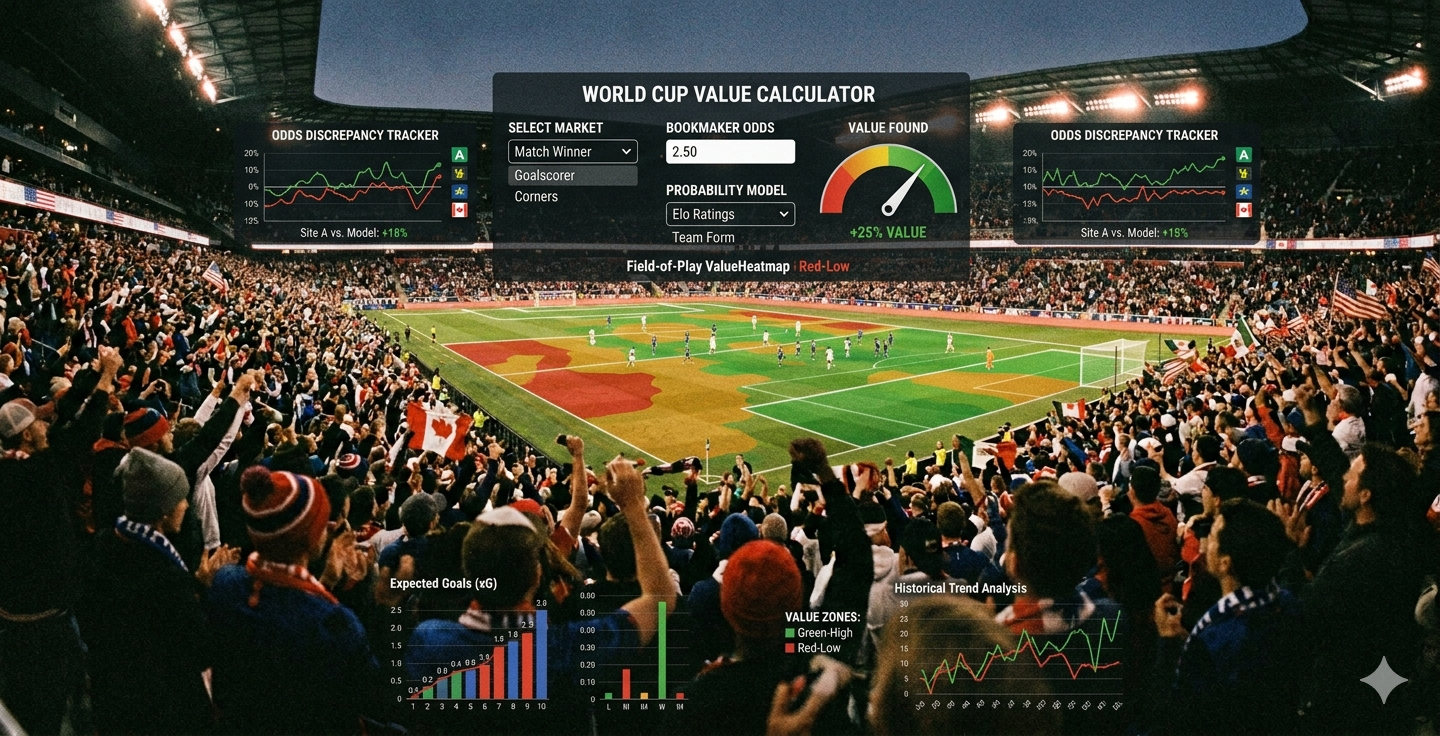
World Cup betting markets are more connected than they look. A team total, a striker prop, a corner bet, and an over can all be tied to the same match script. That can be useful. It can also get dangerous fast. This guide breaks down how I’d use multi-market correlation in World Cup betting. The goal is simple: understand when bets support each other, when they overlap too much, and when your card is secretly one big bet wearing five different outfits.


Key Insights
- Quick Answer: Multi-market correlation means different bets can be connected because they depend on the same match script.
- Best Way To Get Better Results: Check how each bet relates to your main read before stacking sides, totals, props, corners, or cards.
- Biggest Advantage: You avoid accidental overexposure and build smarter betting cards across the full tournament.
What Is Multi-Market Correlation In World Cup Betting?
Multi-market correlation means one outcome can affect several bets at once.
For example, if you think a team will dominate possession and attack all match, that read could support multiple markets:
- Team moneyline
- Team total over
- Match over
- Striker shots over
- Winger assist prop
- Corners over
- Opponent cards over
Those bets are different, but they are connected.
For the bigger picture, start with Advanced World Cup Betting Strategy Guide 2026. That pillar guide should be your base for value betting, bankroll control, market timing, and advanced World Cup betting angles.
The 2026 World Cup gives bettors a massive board to manage. FIFA lists the tournament as a 48-team event with 104 fixtures, which means more match markets, props, live markets, and futures to connect or accidentally overload.
That’s why correlation matters.
You may think you made five separate bets.
But if they all need the same team to dominate, you really made one big opinion five times.
Sometimes that’s fine.
Sometimes that’s how a card gets wrecked.
Looking to get an edge throughout the entire World Cup?
Check out Shurzy’s Predictions tool for data-backed picks, matchup insights, and betting angles across every stage of the tournament. Whether it’s group matches or knockout rounds, this is where smart bettors find value.
Why Does Correlation Matter For Bettors?
Correlation matters because it shows your real risk.
A bettor might say, “I only have small bets today.”
But then you check the card.
Favorite moneyline. Favorite team total over. Favorite striker to score. Match over. Favorite corners. Opponent cards.
That’s not a small card.
That’s a full send on the favorite dominating.
Again, not always bad. If your read is strong and the prices are good, stacking correlated markets can make sense.
But do it on purpose.
Not by accident.
Correlation helps you understand:
- Which bets rise together
- Which bets fall together
- Where your exposure is too heavy
- Which markets support your match read
- Which bets are repeating the same opinion
- Which bets actually diversify the card
The worst version is thinking you are diversified when you are not.
That’s fake safety.
No thanks.
What Are Positive Correlations In World Cup Betting?
Positive correlation means two or more bets usually benefit from the same match script.
Example.
You bet a team to win and that team’s striker over shots. If the team dominates, both bets may be helped.
Other positive correlations can include:
- Match over and both teams to score
- Favorite team total over and favorite moneyline
- Winger shots over and team corners over
- Underdog cards over and favorite possession dominance
- Goalkeeper saves over and opponent shots over
- Striker anytime goal and team total over
- Live over and late-game fatigue
Positive correlation can be useful when you have a clear match read.
If you think a favorite will pin an underdog deep all match, corners, team total, shots, and opponent cards can all connect.
But the problem is price.
If every market already reflects that same expectation, you may just be paying tax across the board.
Good story.
Bad prices.
Dangerous combo.
What Are Negative Correlations In World Cup Betting?
Negative correlation means one bet winning may make another bet less likely.
Example.
You bet under 2.5 goals and both teams to score. That is not impossible, but the path is narrow. You basically need a 1-1 result.
Another example: you bet a team to dominate possession, but also bet its goalkeeper saves over. Those can both win, but they may be fighting each other if the opponent barely attacks.
Negative correlation is not always bad.
Sometimes you use it on purpose to balance risk.
But accidental negative correlation is messy.
Watch for conflicts like:
- Favorite blowout and opponent shots over
- Match under and multiple attacking props
- Team clean sheet and opponent goal scorer
- Heavy possession team and its goalkeeper saves over
- Low-card referee read and card overs
- Draw-friendly match script and aggressive over bets
Before placing bets, ask one question:
Can these bets win together naturally?
If the answer is “only if the match gets weird,” maybe rethink it.
How Does Portfolio Strategy Connect To Correlation?
Correlation is the inside view of your portfolio.
That’s why World Cup Portfolio Betting Strategy fits naturally here. A portfolio shows all your positions. Correlation shows how those positions are connected.
Portfolio betting asks, “What do I own across the tournament?”
Correlation asks, “What do these bets rely on?”
That second question matters.
You can have bets across different markets and still be exposed to the same team, same player, same match script, or same tournament path.
Example.
You hold a futures ticket on a team. Then you keep betting that team’s moneyline, team totals, and player props every match.
Maybe you are right.
But your whole portfolio may now depend on one team staying strong.
That’s a lot of exposure.
Correlation helps you see it before the market punishes it.
Want better World Cup bets?
Use Shurzy’s Predictions tool for data-driven picks and insights.
How Can Correlation Help With Player Props?
Player props are often highly correlated with team markets.
A striker’s shots over may depend on his team controlling the match. A midfielder’s passing prop may depend on possession. A goalkeeper saves prop may depend on his team being under pressure.
So before betting props, I’d connect the player role to the team script.
For example:
- Team dominates: shots, passes, corners, assists may improve.
- Team chases: shots, crosses, cards, and late corners may improve.
- Team protects lead: attacking props may fall, defensive props may rise.
- Team sits deep: goalkeeper saves, clearances, tackles, and cards may rise.
- Match opens up: shots, goal props, fouls, and cards may rise.
This is where bettors get sharper.
Instead of saying, “I like this player,” ask, “What match script helps this prop?”
Then check if your other bets agree or disagree with that script.
If they all agree, you have correlation.
Now decide if that’s intentional.
How Can Correlation Help With Totals?
Totals are connected to almost everything.
If you bet over, you are usually leaning toward chances, tempo, mistakes, game state, or finishing. That can connect with goal scorer props, shots props, both teams to score, team totals, and sometimes cards.
If you bet under, you are usually leaning toward slower tempo, strong defensive structure, weak chance quality, or cautious incentives.
That can connect with:
- Draw markets
- 0-0 first half
- Fewer shots
- Lower team totals
- Some goalkeeper unders
- Fewer attacking props
- More tactical cards, depending on match state
Totals can also conflict with props.
If you like under 2.5 because the match should be slow, do you really want three attacking props tied to that same match?
Maybe not.
Unless the props are mispriced or tied to a specific kind of low-scoring script.
Example: under plus goalkeeper saves can work if one team faces volume but finishes poorly.
That’s a narrow story.
Make sure it makes sense.
How Can Correlation Help With Cards And Corners?
Cards and corners often correlate with pressure.
If one team dominates territory, corners can rise. The defending team may also commit more fouls and pick up cards.
That creates a natural correlation:
Favorite pressure → favorite corners → opponent cards
This can be useful.
But it depends on style.
A team that attacks centrally may not create as many corners. A team that recycles possession patiently may not force many fouls. A referee who lets contact go may hurt card bets.
For corners, I’d connect:
- Wide attacks
- Cross volume
- Blocked shots
- Deep defending
- Game state
For cards, I’d connect:
- Counterattacks
- Tired defenders
- Tactical fouls
- Referee style
- Pressure and frustration
Corners and cards can support the same match read, but they are not the same bet.
Don’t assume pressure automatically means both.
Check how the pressure happens.
How Can Correlation Help With Live Betting?
Live betting is where correlation can change fast.
A pre-match card may have one script. Then a red card, early goal, injury, or substitution changes everything.
Now your correlated bets may not be correlated anymore.
Or they may become even more connected.
Example.
You bet match over and striker shots over. Then the striker’s team scores early and sits deep. Suddenly the match over may still be okay, but the striker shots prop may be worse.
Different role now.
Live betting requires updates.
I’d ask:
- Did the score change the script?
- Did substitutions change roles?
- Did a card change the matchup?
- Is one team chasing now?
- Are my pre-match bets still aligned?
- Would a live bet reduce risk or add too much overlap?
The danger is adding live bets that repeat your losing pre-match read.
A team looks bad, and you keep betting related markets because you want your original opinion to be right.
Don’t do that.
Update the read.
How Can Correlation Affect Same-Game Parlays?
Same-game parlays are basically correlation machines.
That can be good or bad.
A correlated parlay can make logical sense if each leg supports the same match script. But books know this, and pricing may be adjusted.
Examples of correlated SGP ideas:
- Favorite win + favorite team total over + striker shots over
- Underdog cards over + favorite corners over
- Match over + both teams to score + striker shots over
- Draw at halftime + under first half
- Goalkeeper saves over + opponent shots over
But be careful.
Just because legs are correlated does not mean the parlay is value.
Sometimes the correlation is already priced in. Sometimes the payout looks fun but is actually poor. Sometimes one leg is weak and drags the whole thing down.
I’d rather build fewer, cleaner correlated bets than stack random legs because the app makes it easy.
Parlays should tell one story.
Not a messy novel.
What Are The Biggest Multi-Market Correlation Mistakes?
The biggest mistake is accidental stacking.
You think you are betting five angles, but you are really betting one angle five ways.
Other mistakes include:
- Thinking different markets always means diversification
- Ignoring negative correlation
- Stacking props without checking match script
- Betting totals that conflict with player props
- Adding live bets that repeat a bad pre-match read
- Overusing same-game parlays
- Ignoring price
- Forgetting sportsbook rules
- Not tracking exposure
That price one never leaves.
A correlated bet can be logical and still not be worth the number.
Logic is step one.
Value is step two.
You need both.
What Is A Simple Multi-Market Correlation Checklist?
Here’s the quick process I’d use.
First, define your match script. Who controls the ball? Who creates chances? Who chases? Who sits deep?
Next, list the markets that benefit from that script.
Then check which bets overlap. Are they supporting each other or repeating the same risk?
After that, check for conflicts. Does one bet make another harder to win?
Then choose the cleanest markets.
Finally, check price.
If two or three bets support the same read and still offer value, fine.
If you’re just stacking because it feels good, stop.
One strong opinion is enough.
You don’t need to disguise it as six bets.
Where To Go Next
If you want to manage the downside of connected bets, read World Cup Risk Management For Advanced Bettors next. It breaks down staking, exposure control, bankroll buckets, drawdowns, hedging, and smarter risk limits during the tournament.
Before you bet the World Cup, check Shurzy’s Predictions for the best betting angles and value plays.
FAQ
What Is Multi-Market Correlation In World Cup Betting?
Multi-market correlation means different bets are connected because they depend on the same match script or outcome.
Is Correlation Good Or Bad In Betting?
It can be both. Correlation is useful when intentional, but risky when you accidentally overexpose yourself to one team, player, or match script.
Can Player Props Be Correlated With Team Bets?
Yes. Player props often depend on team possession, attacking pressure, game state, minutes, and matchup.
Are Same-Game Parlays Based On Correlation?
Often, yes. Same-game parlays usually combine related outcomes, but bettors still need to check whether the price offers value.
What Is The Biggest Correlation Betting Mistake?
The biggest mistake is thinking different markets automatically mean diversification when all the bets may rely on the same thing happening.

Minimum Juice. Maximum Profits.
We sniff out edges so you don’t have to. Spend less. Win more.


RELATED POSTS
Check out the latest picks from Shurzy AI and our team of experts.