World Cup Portfolio Betting Strategy
World Cup betting gets messy when every bet feels like a one-off. A future here. A prop there. A live bet because the match got spicy. That’s not a plan. That’s a pile. This guide breaks down how I’d build a World Cup betting portfolio. Not to make it complicated. To spread risk better, avoid overloading one opinion, and keep your bets working together instead of fighting each other.


Key Insights
- Quick Answer: A World Cup betting portfolio is a structured mix of futures, match bets, props, live bets, and hedges.
- Best Way To Get Better Results: Balance your bets across markets instead of stacking too much exposure on one team or storyline.
- Biggest Advantage: You reduce emotional betting and make cleaner decisions across the full tournament.
What Is A World Cup Betting Portfolio?
A World Cup betting portfolio is the full collection of bets you hold across the tournament.
That can include futures, group markets, knockout bets, props, live bets, hedges, and even small arbitrage spots.
For the bigger picture, start with Advanced World Cup Betting Strategy Guide 2026. That pillar guide should be your base for value betting, bankroll control, market timing, and advanced World Cup betting angles.
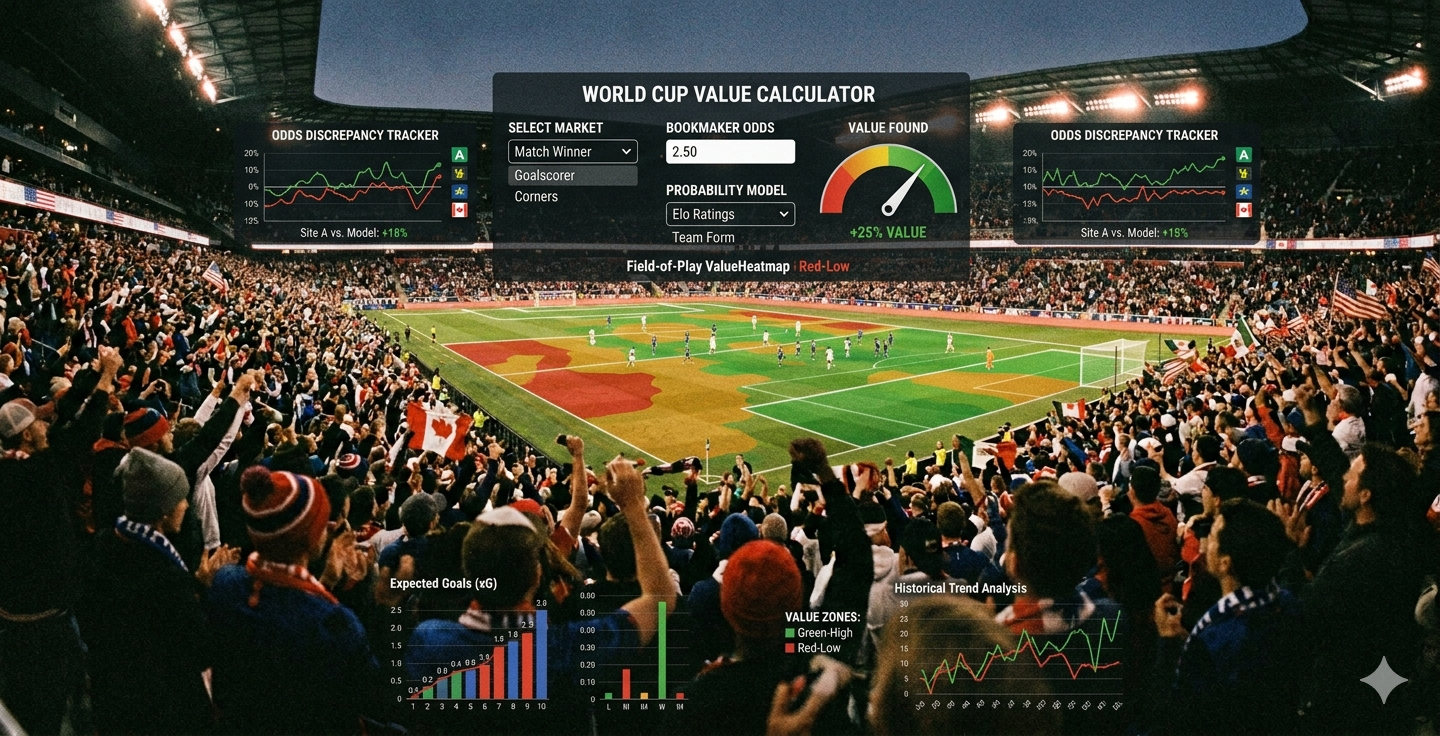
This matters because the 2026 World Cup is huge. FIFA lists the tournament as a 48-team event with 104 fixtures, which means bettors will have more matches, more props, more futures, and more live markets to manage than usual.
More markets can mean more opportunity.
It can also mean more chaos.
If you are betting every match without tracking exposure, you may accidentally overbet the same opinion five different ways.
Example: you bet a team future, then its group winner, then its striker to score, then its team total, then its live moneyline.
Maybe all those bets make sense.
Or maybe you just built one giant bet in five pieces.
That’s portfolio risk.
Looking to get an edge throughout the entire World Cup?
Check out Shurzy’s Predictions tool for data-backed picks, matchup insights, and betting angles across every stage of the tournament. Whether it’s group matches or knockout rounds, this is where smart bettors find value.
Why Should Bettors Think In Portfolios?
A portfolio mindset keeps you from betting like every pick exists alone.
Because they don’t.
World Cup bets connect.
If you bet Brazil to win the tournament, Brazil to win its group, Brazil’s striker to win the Golden Boot, and Brazil team total overs every match, your card may look diversified.
It isn’t.
It is heavily tied to Brazil being good.
That can work if you are right.
But if Brazil underperforms, your whole card can get smoked.
A portfolio helps you see:
- Which teams you are exposed to
- Which match scripts you are relying on
- Which markets overlap
- Where your risk is too concentrated
- Where you need balance
- Where hedging may make sense
This does not mean every bet needs to cancel another bet.
No thanks. That’s too sterile.
It just means you should know what you’re really betting.
What Markets Should Be In A World Cup Portfolio?
A strong World Cup portfolio can include different types of bets.
Not all of them every time. Just enough to spread your angles.
Common portfolio pieces include:
- Tournament futures
- Group winner bets
- To qualify bets
- Match moneylines
- Spreads
- Totals
- Team totals
- Player props
- Cards and corners
- Live bets
- Hedges
- Arbitrage spots
Each market has a different purpose.
Futures give you long-term upside. Match bets create shorter-term value. Props let you target specific roles. Live bets help you react to real match flow. Hedges protect value when the tournament changes.
The key is knowing why each bet is there.
If you cannot explain its role, maybe it doesn’t belong.
Harsh, but useful.
How Should You Divide Your Bankroll?
Start with one rule: do not let the World Cup trick you into betting way bigger than normal.
The tournament is fun. The board is huge. Every match feels important.
That’s exactly why bankroll control matters.
I’d split a World Cup bankroll into buckets:
- Futures and long-term bets
- Match bets
- Player props
- Live betting
- Hedge reserve
The hedge reserve is underrated.
If you use your whole bankroll early, you may not have room to hedge or attack better opportunities later.
That’s painful.
For example, you may find a strong futures bet before the tournament. Great. But if that team reaches the semifinal, you may want hedge money available.
If all your bankroll is already tied up, your options shrink.
So don’t spend the whole tournament bankroll in the first week.
Tempting.
Bad idea.
How Does Arbitrage Fit Into A Portfolio?
Arbitrage can fit into a portfolio as a lower-risk pricing angle.
That’s why World Cup Arbitrage Betting Opportunities fits naturally here. Arbitrage is about using odds gaps across sportsbooks, while portfolio strategy is about how all your bets work together over time.
Arbitrage can help when sportsbooks disagree enough to create a small locked profit. But it usually requires speed, clean math, and multiple accounts.
I would not make arbitrage the whole portfolio.
It is more like a tool.
Useful when available. Not something to force.
If an arbitrage spot appears, ask:
- Does it fit my bankroll?
- Is the margin worth the effort?
- Are the markets exactly the same?
- Can both bets be placed before odds move?
- Does it tie up money I need later?
That last one matters.
Even low-risk bets use bankroll.
Do not lock up funds in tiny edges if bigger value may come later.
Want better World Cup bets?
Use Shurzy’s Predictions tool for data-driven picks and insights.
How Do You Avoid Overlapping Bets?
Overlapping bets are not always bad.
But you need to know when they happen.
A team moneyline, team total over, striker shots over, and striker anytime goal can all be connected. If the team dominates, they may all look good. If the team struggles, they may all suffer.
That is not four separate opinions.
It is one match script.
I’d watch overlap in:
- Team futures and group bets
- Team totals and player props
- Overs and attacking props
- Unders and goalkeeper saves
- Host nation bets and public props
- Cards and high-pressure match scripts
- Live bets added to pre-match positions
Sometimes stacking is fine.
If you strongly believe a match will play one way, you may want correlated bets.
But do it on purpose.
Not accidentally.
The worst version is thinking you have a balanced card when everything depends on the same thing happening.
How Should Futures Fit Into The Portfolio?
Futures should be used carefully because they tie up bankroll.
They can be valuable, especially before the market adjusts to path, injuries, form, or bracket position. But not every futures bet is worth it just because the payout looks big.
For futures, I’d ask:
- Does the team have a real path?
- Is the price better than the true chance?
- Does the team have depth?
- Can I hedge later?
- Is this bet too similar to another position?
- How much bankroll will be tied up?
A good futures position should either give you strong upside or create future flexibility.
If a futures bet has a weak path, bad price, and no hedge value, skip it.
Big payout does not mean good bet.
It just means big number on the screen.
Different thing.
How Should Player Props Fit Into The Portfolio?
Player props are great because they let you bet specific roles instead of full team outcomes.
That can make your portfolio sharper.
Maybe you do not like a team’s moneyline, but you like its winger shots prop. Maybe you think a goalkeeper faces volume even in a loss. Maybe you think one defender is a card risk because of a matchup.
Props help you avoid forcing team bets.
But they can also overlap.
A goal scorer prop, shots prop, and team total over may all depend on the same attack working.
So I’d use props to add precision, not clutter.
For props, track:
- Player role
- Minutes risk
- Matchup
- Game state
- Price
- Exposure to the same team script
If the prop gives you a cleaner angle than the side, take the prop.
If it just repeats a bet you already made, think twice.
How Should Live Betting Fit Into The Portfolio?
Live betting should not be the place where the portfolio loses discipline.
That’s the danger.
You build a clean pre-match plan, then a goal happens, and suddenly you’re adding random live bets because the match feels exciting.
Nope.
Live betting should have a role.
Use it to:
- Confirm pre-match reads
- Add value when odds overreact
- Hedge positions
- Attack fatigue spots
- Bet props after roles are clear
- Avoid bad pre-match uncertainty
Before the tournament, I’d decide how much bankroll is reserved for live betting.
Then stick to it.
Live markets move fast. If you do not have limits, you can turn one bad match into a whole-night problem.
Not very Shurzy.
We want sharp, not chaotic.
How Should Hedging Fit Into The Portfolio?
Hedging is portfolio management.
If you have futures, group bets, or knockout positions that gain value, hedging can protect profit or reduce downside.
But hedging should not be automatic.
Sometimes the best move is to let the position ride. Sometimes the best move is a partial hedge. Sometimes the hedge price is bad and you should leave it alone.
For hedging, I’d ask:
- What position gained value?
- What risk am I trying to reduce?
- What market covers that risk?
- How much upside do I want to keep?
- Is the hedge price fair?
- Do I have bankroll available?
This is why portfolio planning matters.
If you reserve hedge money, you can act when the opportunity appears.
If you don’t, you’re stuck watching.
And hoping.
Not ideal.
What Are The Biggest Portfolio Betting Mistakes?
The biggest mistake is thinking more bets means more strategy.
It doesn’t.
Sometimes more bets just means more ways to lose.
Other mistakes include:
- Overloading one team
- Overloading one match script
- Betting too many futures early
- Forgetting hedge reserve
- Chasing live bets
- Treating props like separate bets when they are correlated
- Ignoring bankroll buckets
- Not tracking open positions
- Adding bets because the tournament feels fun
That last one is real.
The World Cup is fun. That’s why it’s dangerous.
Every match feels like action.
But action is not value.
A portfolio should make your betting calmer, not busier.
What Is A Simple World Cup Portfolio Checklist?
Here’s the quick process I’d use.
First, set your tournament bankroll.
Next, split it into buckets: futures, match bets, props, live betting, and hedge reserve.
Then define your main positions. Which teams, paths, markets, and props are you exposed to?
After that, check overlap. Are too many bets relying on the same team or match script?
Then keep tracking. Update after injuries, lineups, group results, bracket changes, and live market moves.
Finally, hedge only when it improves your risk at a fair price.
If a bet does not fit the portfolio, skip it.
You do not need to bet everything.
You need to bet well.
Where To Go Next
If you want to understand how bets connect across markets, read World Cup Multi-Market Correlation Strategy next. It breaks down how team totals, player props, cards, corners, overs, and futures can overlap or support each other.
Before you bet the World Cup, check Shurzy’s Predictions for the best betting angles and value plays.
FAQ
What Is A World Cup Betting Portfolio?
A World Cup betting portfolio is the full mix of futures, match bets, props, live bets, hedges, and other positions you hold during the tournament.
Why Should I Think In Portfolios?
A portfolio approach helps you manage exposure, avoid overlapping bets, protect bankroll, and make cleaner decisions across the whole World Cup.
Should Futures Be A Big Part Of My Portfolio?
They can be, but futures tie up bankroll. Use them when the price, path, and hedge potential are strong enough.
Can Player Props Diversify A Betting Portfolio?
Yes. Player props can give you more specific angles, but they can also overlap with team bets, so track correlation.
What Is The Biggest Portfolio Betting Mistake?
The biggest mistake is making too many disconnected bets without tracking exposure, bankroll, overlap, or how the positions work together.

Minimum Juice. Maximum Profits.
We sniff out edges so you don’t have to. Spend less. Win more.


RELATED POSTS
Check out the latest picks from Shurzy AI and our team of experts.