World Cup Fair Play Tiebreaker Rules Explained
2018 World Cup. Group H. Final day. Japan versus Senegal. Same points. Same goal difference. Same goals scored. Same head-to-head record from their direct game. The only thing that separated them after all of that was yellow cards. Japan had accumulated fewer disciplinary points across their three group games. Senegal had picked up one more yellow card equivalent in deductions. That was the gap. Six years of tournament qualification, three games of football, a 2-2 draw in their direct match, and it came down to a yellow card. Senegal went home. Japan went through. On fair play. I watched that group stage finale with a bet on Senegal to advance. Lost it on a yellow card from a game three weeks earlier that I had never once thought about when placing the bet. Fair play tiebreakers are rare. But they're real. And in 2026 with twelve groups generating more potential tie scenarios than any previous tournament, understanding how they work is not optional for serious bettors.


When fair play gets used
Fair play points only come into play after every other tiebreaker has failed to separate teams.
The sequence before fair play: points, then head-to-head results between tied teams, then overall goal difference, then overall goals scored. Only when all of those criteria are genuinely identical does FIFA reach for the disciplinary records.
It sounds unlikely. The 2018 case proved it isn't. With twelve groups running simultaneously in 2026, the probability of at least one group reaching the fair play tiebreaker is meaningfully higher than in previous tournaments.
Read More: World Cup Tiebreaker Rules Explained 2026
How fair play points are calculated
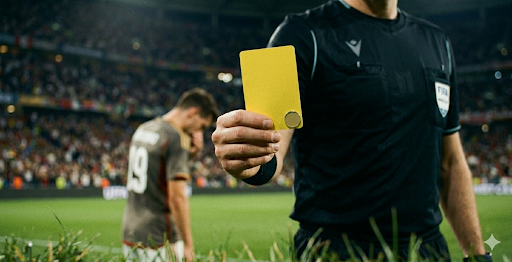
Every yellow and red card a team receives across all three group games generates a negative deduction to their fair play score.
The specific values:
- Yellow card: minus 1 point
- Indirect red card (second yellow in the same game): minus 3 points
- Direct red card: minus 4 points
- Yellow card plus direct red card in the same match: minus 5 points
One deduction per player per match. You don't stack yellow and red separately beyond the combined minus 5 case.
A team's total fair play score is the sum of all deductions across all three group games. More negative means worse discipline. The team with the higher score, meaning fewer or less severe cards, ranks above the other in the tiebreaker.
So a team that finished their group with zero cards has a fair play score of zero. A team with three yellow cards has minus 3. The clean team ranks higher.
Looking to get an edge throughout the entire World Cup? Check out Shurzy's Predictions tool for data-backed picks, matchup insights, and betting angles across every stage of the tournament. Whether it's group matches or knockout rounds, this is where smart bettors find value.
FIFA ranking replaces drawing of lots in 2026
Here's a change from previous tournaments worth knowing.
Traditionally the final tiebreaker after fair play was a literal drawing of lots. Random. Completely random. A coin flip with a fancier name.
For 2026, FIFA ranking has replaced drawing of lots as the last resort tiebreaker. If teams are somehow still perfectly tied after points, head-to-head, goal difference, goals scored, and fair play, the team with the higher pre-tournament FIFA ranking advances.
This is a meaningful change. It gives higher-ranked nations a structural safety net in the most extreme tie scenarios. And it means that a team's pre-tournament FIFA ranking, which most bettors think is only relevant for pot seedings in the draw, actually has a direct role in group advancement in rare circumstances.
What fair play means for betting
Most of the time it means nothing. Fair play almost never decides a group. The 2018 case was genuinely exceptional.
But there are two specific betting angles where it's worth keeping in mind.
Card accumulation tracking in groups with multiple tied scenarios: If you're tracking a group where two teams are level on points, goal difference, and goals scored heading into matchday three, their card totals from earlier games might already be decisive. Checking the fair play scores before betting their final game could tell you which team is already in the stronger position even before a ball is kicked.
Card markets in games involving teams with fair play concerns: If a team is already carrying a high card count and might need to play aggressively in their final group game to chase a result, they're in a difficult position. They need to attack, which typically means more fouls, more cards, and potentially worsening their fair play score in a situation where it might already matter.
That's a small but real consideration for card over markets in specific matchday three scenarios.
Read More: World Cup Cards Betting Strategy 2026
The Senegal lesson applied to 2026
Japan going through on fair play in 2018 wasn't luck. Both teams knew the fair play standings before their final games. Japan managed their discipline deliberately across the tournament partly because they knew it could matter.
In 2026, coaches will be doing the same calculation. A team that knows their fair play score gives them an advantage over a tied opponent has a concrete reason to maintain discipline even in a desperate final group game. A team with a worse fair play score going into matchday three has an extra incentive to avoid bookings, which can actually make them play less aggressively than their group position suggests.
These are subtle but real effects on game scripts in specific situations.
Want better World Cup bets? Use Shurzy's Predictions tool for data-driven picks and insights.
The play
Fair play tiebreakers are rare. Japan versus Senegal in 2018 was the highest-profile case. But rare is not impossible, and in a 48-team tournament with twelve groups generating more tie scenarios than ever, rare becomes more common.
Know the card values. Track fair play scores in groups with multiple teams level on the earlier tiebreakers. Understand that FIFA ranking is now the true last resort if everything else fails.
And next time you're about to back a team to advance from a group, check if there's a dormant yellow card somewhere in their record that's about to cost you money.
I know from experience how much that hurts.
Before you bet the World Cup, check Shurzy's Predictions for the best betting angles and value plays.

Minimum Juice. Maximum Profits.
We sniff out edges so you don’t have to. Spend less. Win more.


RELATED POSTS
Check out the latest picks from Shurzy AI and our team of experts.