World Cup Tie-Breaker Controversies Explained
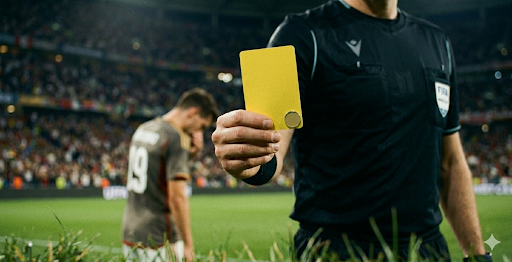
I watched Japan's final group game at the 2018 World Cup with a friend who had a bet on them to advance. Last fifteen minutes, Japan were drawing, already safe on points. But instead of trying to win they just started passing it around the back. Completely stopped attacking. My friend was losing his mind. "Just score. Why won't they score?" Then he found out afterward. Japan were deliberately avoiding yellow cards because their advancement over Senegal came down to the fair play tiebreaker. One extra booking and Senegal goes through instead. They advanced by having fewer yellow cards than a team with the exact same record. Your friend with a Japan parlay won. But nobody felt great about it. That's tiebreaker controversies in a nutshell. Clean on paper. Chaos in practice.


How Tiebreakers Work in 2026
FIFA's official group stage tiebreaker order for 2026 when teams finish level on points:
- Points in all group matches
- Head-to-head points between tied teams, this is new for two-team ties
- Goal difference in all group matches
- Goals scored in all group matches
- Goal difference in head-to-head matches
- Goals scored in head-to-head matches
- Fair play score based on yellow and red card points
- Drawing of lots as absolute last resort
The key change for 2026: when exactly two teams are tied on points, head-to-head points jump ahead of goal difference as the first tiebreaker. When three or more teams are tied, goal difference across all games comes first.
That distinction matters a lot for Matchday 3 betting math.
Read More: The Complete Guide to World Cup Betting 2026
The Disgrace of Gijón: The Match That Changed Scheduling Forever
1982 World Cup. West Germany vs Austria. Last game of the group. Both teams knew before kickoff that a West Germany win by exactly one goal would send both of them through at the expense of Algeria, who had already played.
West Germany scored in the tenth minute. Then both teams basically stopped playing. Passing aimlessly. No real attacks. No urgency. A 1-0 finish suited both perfectly and they both knew it.
Algeria had beaten West Germany earlier in the tournament in one of the biggest upsets in World Cup history. Then watched both teams protect a mutually beneficial result in plain sight. Outrage across Europe. Austrian and German fans booed their own teams.
FIFA's response was not to change the tiebreakers. They changed the scheduling. Now all final group games within each group kick off simultaneously. You cannot know the exact score you need from another game while yours is still being played.
It's one of the most sensible rule changes in World Cup history. And the reason Matchday 3 in 2026 always has both matches in a group running at exactly the same time.
Want better World Cup bets? Use Shurzy's Predictions tool for data-driven picks and insights.
Japan vs Senegal 2018: The Fair Play Nightmare
Russia 2018. Group H final standings. Japan and Senegal. Identical records. Same points. Same goal difference. Same goals scored.
Japan advanced. Because they had fewer yellow cards.
The fair play tiebreaker assigns negative points to cards:
- Each yellow card: -1 point
- Second yellow leading to red: -3 points
- Direct red: -4 points
- Yellow plus direct red: -5 points
Japan had accumulated fewer cautions across their three games. Senegal went home. Both teams completely equal in every meaningful performance metric except discipline.
Critics went hard on this outcome for two reasons. First, it felt deeply arbitrary. Second, and more importantly, it created a perverse incentive. In their final game Japan played ultra-conservatively specifically to avoid bookings. They stopped making normal challenges. Gave up offensive pressure. Prioritized card avoidance over winning.
FIFA kept the fair play rule for 2022. It's still in the 2026 rules. So the same incentive structure exists in the closing minutes of tight group games where teams are level on everything else.
For bettors this means: in a match where two teams are potentially separated only by fair play points, the team at risk of advancing by that metric plays more passively late in the game. Relevant for second-half under bets and late-goal props.
The Head-to-Head vs Goal Difference Debate
FIFA has flipped the order of head-to-head and goal difference multiple times across World Cup cycles and the debate about which should come first has never really been settled.
The case for goal difference first: it reflects overall performance across all three games. A team that beats everyone convincingly should be rewarded more than a team that barely edged a head-to-head.
The case for head-to-head first: the direct result between two tied teams is the most relevant competitive information. You played each other. That result should matter most.
The criticism of head-to-head first: three-way ties become complex and can produce outcomes that feel genuinely illogical. A team can beat their direct rival but still miss out because of how the three-way math works across multiple games.
For 2026 FIFA went with head-to-head points first for two-team ties and goal difference first for three-or-more-team ties. A compromise that will inevitably create a controversy at some point during the tournament.
Looking to get an edge throughout the entire World Cup? Check out Shurzy's Predictions tool for data-backed picks, matchup insights, and betting angles across every stage of the tournament. Whether it's group matches or knockout rounds, this is where smart bettors find value.
The Golden Goal Era: An Experiment Nobody Loved
Before extra time and penalties became standard, FIFA tried two different ways to make knockout matches more dramatic.
Golden goal (1998 to 2002 World Cups): First goal in extra time wins immediately. Match over. No waiting for the full 30 minutes.
Silver goal (used in some other tournaments): If a team leads at half-time of extra time the match ends there.
Both got scrapped. Quickly.
The problem with golden goal: teams played so cautiously in extra time that matches became less attacking than regular time. Nobody wanted to make a mistake that ended everything instantly. The rule designed to create drama produced the opposite.
The problem with silver goal: same issue, plus the bizarre situation where a team trailing at the half-time break of extra time had nothing to lose and a team leading had every incentive to park the bus for fifteen minutes.
FIFA went back to full 30-minute extra time followed by penalties. It's not perfect. Shootouts still feel like a lottery to plenty of people. But at least teams actually play football in extra time now.
Read More: World Cup Penalty Shootout Betting Guide 2026
The Drawing of Lots: The Rule Nobody Wants to Use
Still in the rulebook. Absolute last resort. Pure random chance decides which team advances when every other tiebreaker is exhausted.
Never been used in the modern era of the World Cup because the combination of points, goal difference, goals scored, head-to-head, fair play, and the range of other metrics makes it essentially impossible for all of them to be equal.
But it's there. Sitting at the bottom of the list. A reminder that FIFA's entire tiebreaker structure is ultimately trying to avoid having to flip a coin to send a nation home from the World Cup.
The Betting Angles Tiebreakers Create
Tiebreaker rules create specific situations worth knowing before Matchday 3 in any group:
- Two-team tie scenarios: Head-to-head points first means the direct result between those two teams is the most important number, affects how aggressively both play their final game
- Fair play risk situations: Teams potentially separated only by card count play more passively late, relevant for under bets and late-goal props
- Goal difference farming: Teams safe in first place but wanting to protect tiebreaker position may continue attacking for goal difference in already-decided matches
- Three-way tie math: Goal difference across all games comes first, creates incentive for big wins over weaker opponents earlier in the group
The Play
Tiebreakers look like a dry technical topic until they decide whether your team advances or goes home. Japan 2018 happened. Gijón 1982 happened. Both of those situations came with clear betting angles visible to anyone who understood the math before Matchday 3.
Know the 2026 tiebreaker order. Know when head-to-head kicks in versus goal difference. And watch for the fair play incentive showing up in passive late-game play from teams on the bubble.
Before you bet the World Cup, check Shurzy's Predictions for the best betting angles and value plays.

Minimum Juice. Maximum Profits.
We sniff out edges so you don’t have to. Spend less. Win more.


RELATED POSTS
Check out the latest picks from Shurzy AI and our team of experts.