World Cup Rule Changes History and Evolution
My dad watched the 1990 World Cup final and still talks about how boring it was. Italy vs West Germany. Eight total shots across the whole match. One goal. A penalty in the 85th minute. The slowest, most defensive football imaginable on the biggest stage in the sport. It was so bad that FIFA changed two major rules within two years specifically because of that tournament. The back-pass rule in 1992. An offside reinterpretation that shifted benefit of doubt to attackers. Both designed to make the game look less like a chess match between two teams terrified of losing. The World Cup has always been the biggest pressure test for football's rules. When something goes badly wrong in front of a billion viewers, FIFA changes it. Here's the full story.


The Early Stuff: Rules That Predate Our Grandparents
Some fundamental rules feel like they've always existed but have specific origin stories worth knowing.
1891: The penalty kick was introduced. Before this, serious fouls near goal went inadequately punished. Teams could foul freely inside their own box without meaningful consequences. The penalty was invented to fix exactly that problem.
1925: The offside rule changed from requiring three defenders to two defenders to keep an attacker onside. The old three-defender rule had produced increasingly negative football as teams learned to exploit it with organized offside traps. Reducing it to two opened up the game significantly.
1958: Substitutes became allowed for the first time. Initially only for an injured goalkeeper plus one outfield player. The idea that you might play an entire match with eleven players and zero flexibility seems absurd now. For most of the World Cup's history that was exactly the rule.
Read More: The Complete Guide to World Cup Betting 2026
1970: Cards Finally Solve a Communication Crisis
Before the 1970 World Cup, referees communicated decisions verbally. In a global tournament with players from dozens of countries speaking dozens of languages, this was predictably chaotic.
At the 1966 World Cup a player was sent off without a clear signal. Nobody in the stadium or watching at home immediately understood what had happened. The confusion was embarrassing at that level.
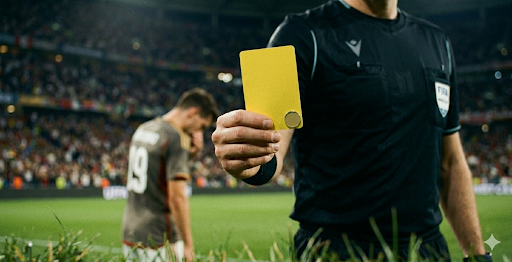
1970 introduced yellow and red cards. Visual, universal, language-independent. A yellow is a yellow whether you're watching in Buenos Aires or Tokyo.
That seemingly simple change transformed how discipline was communicated globally. Card accumulation rules and suspension thresholds came later, building on the foundation the card system created.
Want better World Cup bets? Use Shurzy's Predictions tool for data-driven picks and insights.
1990: The Tournament So Boring It Changed Football
Italy 1990 averaged fewer than 2.2 goals per game. The lowest in World Cup history. Defensive football had reached its logical extreme. Back-passes to the goalkeeper were used as a time-wasting tactic constantly. Teams with a lead would simply pass the ball to their keeper, who would pick it up, hold it for as long as possible, and restart slowly.
FIFA responded with two significant changes:
Back-pass rule (1992): Goalkeepers can no longer handle deliberate back-passes from teammates with their feet. The ball comes back and the keeper has to play it with their feet or distribute it. This single rule forced more action and eliminated the most blatant time-wasting tactic in the game.
Offside reinterpretation: Attackers who are level with the second-last defender are now onside. Previously the benefit of doubt went to the defense. Shifting it to attackers opened up space and encouraged more runs in behind.
Both changes worked. Goal averages increased. The game looked more attacking. 1990 remains the cautionary tale FIFA references whenever defensive football becomes too dominant.
1994: Three Points for a Win Changes Everything
Before 1994 a win gave you two points. A draw gave you one. That meant a draw was worth exactly half a win. Teams with a comfortable position could afford to draw without sacrificing much.
Changing wins to three points made draws significantly less valuable relative to wins. Teams needed to attack to get full value from matches. Draws still happened but the incentive structure pushed teams toward taking risks to win rather than settling.
This also reshaped tiebreaker dynamics because fewer groups ended with multiple teams all level on low point totals. The points reform and the tiebreaker system evolved together across the 1990s.
Looking to get an edge throughout the entire World Cup? Check out Shurzy's Predictions tool for data-backed picks, matchup insights, and betting angles across every stage of the tournament. Whether it's group matches or knockout rounds, this is where smart bettors find value.
The Golden Goal Experiment: A Well-Intentioned Disaster
Replays for drawn knockout matches had been scrapped because they caused scheduling chaos and fatigue. Penalty shootouts replaced them but felt to many people like a lottery. FIFA wanted something more decisive and more dramatic.
Golden goal was the answer. First goal in extra time wins immediately. Introduced for the 1998 and 2002 World Cups.
The problem: teams played even more cautiously in extra time than in regular time. The risk of making any attacking mistake was instant elimination. The rule designed to produce more goals produced fewer. Both teams sat back and hoped the other made an error.
Silver goal was briefly used in some tournaments. If you lead at half-time of extra time the match ends. Same problem. Teams with a lead at the break had every reason to defend desperately for fifteen minutes.
Both experiments got scrapped. Full 30-minute extra time and penalties became the permanent solution. Not perfect. But at least both teams actually try to score.
Read More: World Cup Extra Time Betting Strategy 2026
2014 and 2018: Technology Finally Arrives
Two high-profile incidents drove FIFA toward technology faster than any rule debate had managed.
Frank Lampard's disallowed goal against Germany in the 2010 World Cup quarterfinals. The ball crossed the line by a significant margin. Every camera angle confirmed it. The referee didn't give it. England lost. The moment became the definitive argument for goal-line technology.
Goal-line technology was introduced at the 2014 World Cup. Sensors in the ball and goal posts give the referee a definitive signal within a second when the ball crosses the line. No more Lampard moments.
VAR arrived for Russia 2018. Years of refereeing controversies across major tournaments had built enough pressure that FIFA finally committed to video review for goals, penalties, red cards, and mistaken identity. Not perfect. Still generates debate. But clear and obvious errors get corrected instead of standing forever.
Both technologies changed how matches feel to watch. And both created new betting considerations around how quickly decisions get confirmed or reversed.
2026: The Current State of the Rules
The 2026 World Cup brings several rule adjustments on top of everything that came before:
- Round of 32 added as a new knockout stage, 48 teams means more rounds
- Top four seeds protected in separate bracket quadrants
- 72-hour minimum rest between matches now formalized
- Standardized hydration breaks built into every match
- Stricter discipline guidelines including new red card triggers for covering the mouth and surrounding officials
- Updated tiebreaker order with head-to-head points first for two-team ties
Each of these responds to either the expanded format, player welfare concerns, or lessons from recent tournaments. The pattern holds. A problem emerges. Public pressure builds. FIFA changes something.
The Play
Understanding why rules exist makes you a smarter bettor. The back-pass rule changed how goalkeepers are used. The three-point system changed how teams approach group games. VAR changed how you interpret goals in live markets.
Every rule in 2026 has a reason behind it. And every reason connects to a specific moment in World Cup history where the old approach failed spectacularly.
Before you bet the World Cup, check Shurzy's Predictions for the best betting angles and value plays.

Minimum Juice. Maximum Profits.
We sniff out edges so you don’t have to. Spend less. Win more.


RELATED POSTS
Check out the latest picks from Shurzy AI and our team of experts.