World Cup Replay Rules and Policies Explained
The 2009 France versus Republic of Ireland playoff. Thierry Henry's handball. Clear as day on camera. Set up the goal that sent France to the World Cup instead of Ireland. The Irish Football Association formally requested a replay. FIFA said no. Cited Law 5. Refereeing decisions on the pitch are final. Ireland didn't go to the World Cup. Henry went. The rule held. That case is the clearest modern example of how FIFA thinks about replays. And understanding it tells you almost everything you need to know about when a disputed World Cup result can and cannot be changed.


Replays Are Basically Gone From Modern Football
Historically the World Cup used replays fairly regularly. Knockout matches that ended level after extra time got replayed on another day. This was standard practice from 1930 through parts of the 1980s.
Timeline of how replays disappeared:
- 1930 to 1958: tied knockout games could lead to full replays
- 1962 to 1982: only the final could be replayed if still level after extra time
- Post-1986: extra time and penalty shootouts replaced replays entirely for drawn matches
Now draws in knockout games are always resolved by extra time then penalties. No replays for level matches. Ever. That part of replay history is fully closed.
Replays today exist only in very specific, very rare circumstances that have nothing to do with the match ending level.
Read More: The Complete Guide to World Cup Betting 2026
Law 5: The Rule That Killed Most Replay Claims
Law 5 of the Laws of the Game is the foundation of why replays almost never happen even when something clearly went wrong.
The principle: referee decisions on facts connected with play are final.
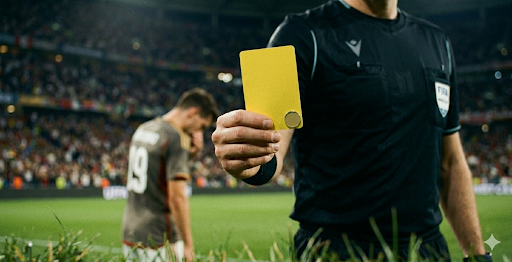
A handball that wasn't called. An offside that was wrong. A penalty that shouldn't have been given. A goal that crossed the line but wasn't awarded. Under Law 5, none of these are grounds for a replay. The referee's judgment on the pitch is the final word on those situations regardless of what the camera shows afterward.
FIFA has been consistent on this for decades. In the Henry handball case they were explicit. Allowing replays for missed incidents would create, in their words, absolute chaos. Every team with a grievance would demand one. The tournament would never finish.
Want better World Cup bets? Use Shurzy's Predictions tool for data-driven picks and insights.
The Narrow Window Where Replays Can Happen
There is one category of situation where a replay becomes possible. Technical misapplication of the Laws themselves rather than a judgment call within those Laws.
The clearest example: a 2006 World Cup qualifier between Uzbekistan and Bahrain. The referee incorrectly applied the penalty rules after encroachment by an attacker. Instead of ordering a retake, he gave an indirect free-kick. That was a misapplication of the Laws, not a judgment call about whether encroachment occurred. FIFA ordered a full replay of the match.
The distinction is subtle but important:
- Referee judges that a foul happened but gets the severity wrong: judgment call, no replay possible
- Referee applies the wrong rule entirely after correctly seeing what happened: misapplication of Laws, potential basis for replay
At World Cup level this distinction is taken very seriously. Misapplication cases are genuinely rare because referees at this standard are well-trained on the Laws. But the mechanism exists for when it happens.
Resumption vs Full Replay: The Preference Is Clear
Under current FIFA competition rules the strong preference is always resumption over full replay.
The framework:
- Force majeure interruption like weather or power outage: resume from the exact minute and score at abandonment, same players and substitution context
- Clear technical misapplication of Laws, very rare: potential basis for ordering a full replay if competition regulations allow
- Eligibility issues or ineligible player used: usually resolved through disciplinary outcomes like forfeiture rather than replay
- Refereeing judgment errors: not grounds for anything, result stands
Full replays ordered by FIFA outside of technical misapplication scenarios are essentially theoretical at this point in the sport's development. The competition regulations are built around resumption and finality.
Looking to get an edge throughout the entire World Cup? Check out Shurzy's Predictions tool for data-backed picks, matchup insights, and betting angles across every stage of the tournament. Whether it's group matches or knockout rounds, this is where smart bettors find value.
CAS and Replay Disputes
If a federation requests a replay and FIFA declines, that federation can appeal through CAS. The Court of Arbitration for Sport can review whether FIFA correctly applied its own rules and regulations.
But CAS also respects Law 5. Their review focuses on procedural fairness and whether competition rules were properly followed. Not whether a referee's in-game decision was right or wrong on the facts.
The bar for CAS ordering a replay is extremely high. Higher than most people assume when they're frustrated about a bad call. A genuinely terrible refereeing decision that affects a World Cup result stays as a result. Angry as that makes everyone involved.
Read More: World Cup Discipline and Appeals Process 2026
The 2026 Summary: Four Situations, Four Outcomes
For clarity here's how replay and result policy works in 2026 across the main scenarios:
Drawn knockout match after 90 minutes: Extra time then penalties. No replay. Never.
Match abandoned for force majeure: Resume from the exact point of interruption with the same score and substitution context. Rarely a full replay.
Technical misapplication of Laws: Possible basis for replay ordered by FIFA's bodies, extremely rare and fact-specific.
Referee makes a wrong judgment call: Result stands. Full stop. Ireland 2009 is still the result.
What This Means for Your Bets
Replay uncertainty is not really a live betting variable at the World Cup. The rules make it clear that results almost never get overturned or replayed.
Practical implications:
- Post-match controversy: A disputed handball goal or controversial red card does not create meaningful replay risk, bet accordingly without factoring in reversal probability
- Abandoned match bets: If a match is abandoned and resumes from the interruption point most books treat pre-abandonment bets as still active, check your book's specific policy
- Forfeiture decisions: An ineligible player or team conduct issue could result in a forfeit ruling that changes the official result, different from replay but affects settled bets in ways your book will handle case by case
- CAS timeline: Even if a federation appeals through CAS the Ad Hoc Division has a 48-hour window, fast enough that you know the outcome before the next round
The Play
The World Cup result stands. Almost always. Regardless of how wrong the call looked on camera. Law 5 protects the finality of on-pitch decisions and FIFA enforces that principle consistently.
Focus your energy on the match that's being played, not on whether a disputed result from the previous round is going to get reversed. It almost certainly isn't.
Before you bet the World Cup, check Shurzy's Predictions for the best betting angles and value plays.

Minimum Juice. Maximum Profits.
We sniff out edges so you don’t have to. Spend less. Win more.


RELATED POSTS
Check out the latest picks from Shurzy AI and our team of experts.