World Cup Group Rankings System Explained
Every World Cup I bet, I go through the same process before matchday three. I pull up every group table, work through every possible scenario, and map out what each team actually needs from their final game. Not just who wins. What they need. Win versus draw versus specific margin. Whether head-to-head from an earlier game already decides things. Whether goal difference is even relevant or whether fair play might be lurking. Most bettors skip this entirely. They look at the standings, see two teams on equal points, assume the winner of the final game goes through, and bet accordingly. That's usually right. Sometimes it's catastrophically wrong. The complete group rankings system in 2026 has five steps. Here's every one of them in plain language.


Step zero: points decide most things
Before any tiebreaker applies, groups are sorted by total points. Three for a win, one for a draw, zero for a loss.
If every team in a group has a different points total after three games, the group is decided. No tiebreakers needed. Clean and simple.
If any teams share the same points total, the ranking system kicks in for those specific teams.
Most groups resolve at this stage. But twelve groups running over six weeks in 2026 means plenty of tied-on-points scenarios developing across the tournament. The system below is what resolves them.
Read More: How Teams Advance From the Group Stage 2026
Step one: head-to-head between tied teams
When teams are level on points, FIFA's first move is to look only at the games played directly between those tied teams. Everything else gets ignored temporarily.
Three criteria applied in order using only the head-to-head games:
- Points from games between the tied teams
- Goal difference from games between the tied teams
- Goals scored from games between the tied teams
If one team beat another directly, they have more head-to-head points. Ranked higher. Done.
If they drew, goal difference and goals scored from that specific game are checked. Still tied? The process moves to step two.
For three-team ties, a mini-league of games between those three sides gets created. Same three criteria applied. If the mini-league partially separates teams but leaves two still tied, the criteria get reapplied to just those two.
Head-to-head is exhausted completely before overall group stats ever come into play.
Looking to get an edge throughout the entire World Cup? Check out Shurzy's Predictions tool for data-backed picks, matchup insights, and betting angles across every stage of the tournament. Whether it's group matches or knockout rounds, this is where smart bettors find value.
Step two: overall group performance
Only when head-to-head genuinely can't separate the tied teams does FIFA expand to full group stats.
Two criteria in order:
- Goal difference across all three group games
- Goals scored across all three group games
Goal difference is goals scored minus goals conceded across the full group stage. Higher is better. If Team A has plus three and Team B has plus two on equal points, Team A ranks higher.
If goal difference is identical, goals scored total is checked. More goals scored overall equals higher ranking even with the same goal difference.
These two criteria separate the vast majority of remaining tied teams. You rarely get past goals scored before the ranking is decided.
Read More: World Cup Goal Difference Rules Explained
Step three: fair play points
If teams are still level after all goal-based criteria, disciplinary records decide.
Card deduction values:
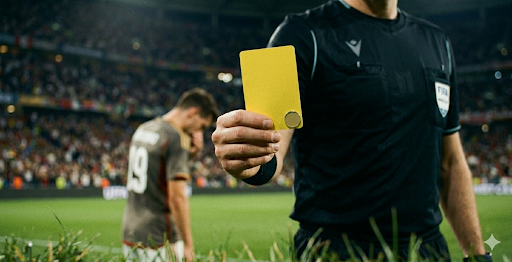
- Yellow card: minus 1
- Indirect red (second yellow): minus 3
- Direct red: minus 4
- Yellow plus direct red in same match: minus 5
Applied across all three group games for each team. The team with fewer disciplinary deductions ranks higher.
- Japan over Senegal. On fair play. After everything else was equal. It happened once. It will happen again in 2026 with twelve groups generating more potential tie scenarios than any previous tournament.
Want better World Cup bets? Use Shurzy's Predictions tool for data-driven picks and insights.
Step four: FIFA world ranking
The absolute last resort. New for 2026.
Previously drawing of lots, literally random, was the final tiebreaker. For 2026 FIFA replaced it with world ranking. If teams are somehow still perfectly tied after every other criterion, the higher-ranked nation per the pre-tournament FIFA rankings advances.
Genuinely rare. But now deterministic rather than random. Higher-ranked nations have a structural last-resort safety net they didn't have in previous tournaments.
The full sequence in plain language
Group standings start with points. Everything else only applies when teams are level.
Level on points: head-to-head results between those teams first. Points, then goal difference, then goals scored in their direct games only.
Still tied after head-to-head: overall group goal difference, then overall goals scored across all three games.
Still tied after goals: fair play disciplinary points.
Still tied after fair play: FIFA world ranking.
Five steps. Most groups never get past step one or two. But knowing all five tells you exactly what each team is playing for in every possible matchday three scenario.
How the full system applies to betting
The complete ranking ladder tells you something specific about game scripts.
A team that has already won the head-to-head against their tied opponent doesn't need to win their final game. Their tiebreaker is already decided. Conservative setup. Rotation possible. Unders and their opponent gaining value.
A team that lost the head-to-head needs to win outright or engineer a goal difference swing significant enough to matter. Attacking intent required. Higher variance.
A team level on head-to-head results and equal on goal difference needs to score goals. Plural. Because goals scored is the next separator and they need more of them than the team they're tied with.
A team that knows their fair play score gives them an advantage over a tied opponent might manage their discipline deliberately. Less likely to pick up bookings. More conservative in their fouling. That's a subtle but real effect on late-game card markets.
The play
The group rankings system is a five-step ladder. Points, head-to-head, goal difference, goals scored, fair play, FIFA ranking.
Most groups get decided in the first two steps. But the teams that understand all five steps know exactly what they need heading into matchday three. And bettors who understand all five steps can read those game scripts accurately.
Work through the ladder before every final group game bet. It takes five minutes. It tells you exactly what each team is playing for. And it saves you from backing Mexico against Poland when Poland already won the head-to-head three weeks ago.
Before you bet the World Cup, check Shurzy's Predictions for the best betting angles and value plays.

Minimum Juice. Maximum Profits.
We sniff out edges so you don’t have to. Spend less. Win more.


RELATED POSTS
Check out the latest picks from Shurzy AI and our team of experts.