World Cup Match Abandonment Rules Explained
There was a lower-league match I watched years ago that got abandoned in the 71st minute because of a floodlight failure at a smaller ground. One set of lights came back. The other didn't. Referee consulted with match officials for twenty minutes while both teams stood in the half-lit tunnel. Eventually pulled the plug. Match replayed from scratch two weeks later. Different result. Same teams. Different day. Completely changed how the season played out. At the World Cup the abandonment rules are more structured than a local league referee making judgment calls in a dark tunnel. Here's exactly how it works.


Only the Referee Can Abandon a Match
Under the Laws of the Game, one person has the authority to abandon a World Cup match. The referee. Nobody else.
Teams cannot abandon a match. Coaches cannot abandon a match. A team that walks off the pitch or refuses to continue does not get a sympathetic ear. They face forfeiture and potential disciplinary sanctions on top of it.
The referee consults with match delegates and team officials in serious situations but the final call belongs to the referee alone.
Reasons that can justify abandonment:
- Serious crowd violence or active security threats
- Unsafe playing conditions from severe weather, damaged pitch, or floodlight failure
- A team having fewer players than the minimum required to continue play
Read More: The Complete Guide to World Cup Betting 2026
Force Majeure: Resume From Where You Left Off
The most common abandonment scenario at the World Cup level is force majeure. Lightning. Severe weather. A power outage. Something outside either team's control.
For force majeure abandonment, the core principle is:
Resume from the exact minute the match was abandoned, with the exact same scoreline.
The specific rules that apply at resumption:
- Same players on the pitch at the moment of abandonment
- Same substitutions available as at that moment, teams cannot use subs they'd already burned
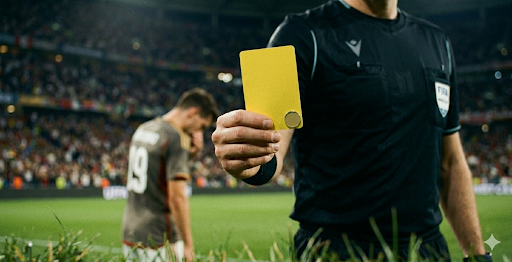
- Yellow and red cards already issued remain valid for the remainder of the match
- Any player already suspended still serves that suspension
The goal is complete competitive fairness. Everything that happened before the abandonment counts. The match continues as if someone pressed pause rather than stop.
Want better World Cup bets? Use Shurzy's Predictions tool for data-driven picks and insights.
When Does a Full Replay Happen Instead?
Full replays at the World Cup level are rare. The default is always resumption. But there are specific circumstances where a replay gets ordered instead.
Generally speaking in domestic competitions the informal rule is:
- Abandonment before roughly 75 minutes makes a full replay more likely
- Abandonment after roughly 75 minutes makes the existing score more likely to stand or the match to resume
At World Cup level FIFA doesn't use a simple minute cutoff. Competition regulations and FIFA's organizing and disciplinary bodies decide case by case based on the specific circumstances. It's more flexible and more fact-specific than a domestic league's standard policy.
Full replays at this level are genuinely exceptional. The last thing FIFA wants during a packed 39-day schedule is ordering complete match replays. The infrastructure for resumption exists specifically to avoid it.
If a Team Causes the Abandonment
Crowd violence attributable to one set of supporters. A team walking off. A team deliberately causing conditions that force abandonment. These are not treated the same as lightning strikes.
If abandonment is caused by a team or their supporters the FIFA Disciplinary Committee can:
- Declare a forfeit result, typically a 3-0 loss, against the responsible team
- Issue fines and order future matches to be played behind closed doors
- Deduct points or expel a team from the competition in extreme cases
Teams that walk off arguing an unsafe condition when FIFA determines the condition was manageable face the same consequences. You have to actually be in danger, not just unhappy with the situation.
Looking to get an edge throughout the entire World Cup? Check out Shurzy's Predictions tool for data-backed picks, matchup insights, and betting angles across every stage of the tournament. Whether it's group matches or knockout rounds, this is where smart bettors find value.
Stadium Operations During Abandonment
When a match gets abandoned the stadium operations team has immediate responsibilities running alongside the on-field situation.
Standard protocol:
- Public address announcements and screen messages informing spectators of the situation
- Controlled exit or shelter procedures depending on the type of incident
- Security coordination to manage crowd flow safely
- Broadcaster and media communications from official FIFA channels on what happens next
The specific response depends on why the match was abandoned. A lightning suspension means spectators shelter in place or move to covered concourses. A security threat might trigger evacuation procedures. Both have predetermined protocols that FIFA tests with venues before the tournament.
Read More: World Cup Weather Delay Rules Explained 2026
What This Means for Your Live Bets
Abandonment creates specific live betting situations that catch unprepared bettors completely off guard.
The critical things to know:
- Mid-match suspension: Lines go dark or freeze immediately. Most books suspend all markets when play stops for potential abandonment
- Resumption timing: If the match resumes the same day your bet typically stays active. If it's rescheduled your book's rules determine whether bets stand or are voided
- Score at abandonment: For matches that resume from the abandonment point, any bets placed before the stoppage remain in play, your over bet at 1-1 in the 60th minute is still live when play restarts at 1-1 minute 60
- Forfeiture decisions: A 3-0 forfeit ruling affects all pre-match and in-play bets differently depending on your book's specific abandonment policy
Check your sportsbook's specific abandonment rules before any match with serious weather risk at that venue.
The Play
Abandonment rules exist to protect competitive fairness and keep the tournament moving. The resume-from-interruption principle means force majeure events are inconvenient but not tournament-altering in most cases.
For live betting, know your book's abandonment policy before the match. Know the weather forecast for the venue. And in physical matches with crowd tension, understand that a team causing abandonment faces consequences that go well beyond losing one match.
Before you bet the World Cup, check Shurzy's Predictions for the best betting angles and value plays.

Minimum Juice. Maximum Profits.
We sniff out edges so you don’t have to. Spend less. Win more.


RELATED POSTS
Check out the latest picks from Shurzy AI and our team of experts.