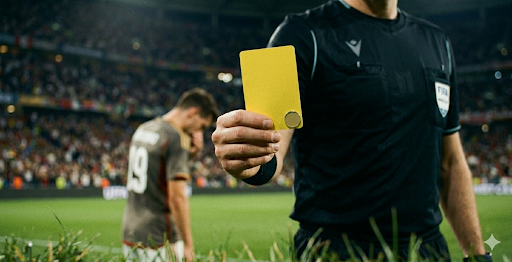
World Cup Red Card Rules Explained
I once watched a guy in my group chat lose a same-game parlay in the 34th minute. Not because of a bad result. Not because of an injury. Because the team's best defender got a straight red for a last-man foul and the whole match flipped. The final score went from a clean sheet lock to a 3-1 disaster. He didn't even know DOGSO was a thing before that night. Red cards don't just end a player's match. They reshape the entire game, and every bet attached to it. Here's what you need to know before one ruins yours.


What a Red Card Actually Does
Immediate dismissal. No replacement. The team plays the rest of the match with ten men.
That's the part everyone knows. But the suspension side is where bettors get caught slipping.
Any red card, direct or via two yellows in the same game, means an automatic one-match ban served in the very next match. No exceptions. No appeals on the basic ban. Gone for at least one game and possibly more depending on what they did.
Read More: The Complete Guide to World Cup Betting 2026
Ways to Get a Red Card at the World Cup
Not every bad tackle ends in a sending off. Here's what actually gets a player dismissed:
- Serious foul play, dangerous tackles that put an opponent's safety at risk
- Violent conduct, striking, kicking, headbutting off the ball
- Denying an obvious goal scoring opportunity (DOGSO) via deliberate handball or last-man foul
- Biting or spitting at anyone on the pitch
- Offensive, insulting, or abusive language or gestures
- Second yellow card in the same match
That last one is the indirect red. Two yellows in one game equals an immediate dismissal plus a one-match ban. Same result as a direct red, just a different path to get there.
Coaches and staff can also get sent off. They don't take the team down a player but they do face touchline bans. Worth knowing if a manager's sideline behavior is part of your angle.
Want better World Cup bets? Use Shurzy's Predictions tool for data-driven picks and insights.
How Long Are Red Card Suspensions
Automatic one-match ban. Every time. No exceptions for stars, no breaks for first offenses.
But FIFA's disciplinary panel can pile on extra games depending on severity:
- Violent conduct usually brings multi-match bans
- Spitting is treated seriously and often gets extended
- Serious assaults can result in lengthy suspensions and fines
- Extremely serious incidents can mean bans that stretch beyond the tournament
That last point matters for betting. If a player gets a red in their team's last game and doesn't serve the full ban, it carries over to their next official international fixture. Not relevant for tournament bets but worth knowing for futures.
Do Red Cards From Other Tournaments Carry Over
Good news here. Nope.
Red cards shown in other competitions like the Gold Cup or Copa América 2026 will not prevent players from appearing in their team's first World Cup match. Every squad starts the tournament with a clean slate on red card suspensions from outside competitions.
Within the World Cup itself though, any red card immediately affects the next match until fully served. No reset, no grace period. The suspension kicks in right away.
Read More: World Cup Betting Based on Player Injuries 2026
Red Cards vs Yellow Card Accumulation
These two systems run side by side and it's worth knowing how they interact:
- Two yellows in two different matches = one-match ban from accumulation
- Two yellows in the same match = red card, immediate dismissal, one-match ban
- Direct red = immediate dismissal, one-match ban minimum
The big difference is the card wipe. All accumulated yellows get cancelled after the quarterfinals. Red card suspensions do not get wiped. A red in the quarterfinal still means a one-match ban for the semifinal regardless of the reset.
So in the knockout rounds, the only thing that can rule a clean player out of the semis or final is a red card or a specific disciplinary sanction. Not yellows. This changes prop value significantly in the back half of the tournament.
Looking to get an edge throughout the entire World Cup? Check out Shurzy's Predictions tool for data-backed picks, matchup insights, and betting angles across every stage of the tournament. Whether it's group matches or knockout rounds, this is where smart bettors find value.
What This Means for Your Bets
Red cards hit different bet types in different ways:
- Match result: Ten men changes everything. Favorites become coin flips, underdogs get cover opportunities
- Team totals: A red before halftime almost always pushes games toward the under
- Clean sheet bets: A red for the defending team blows up any clean sheet prop instantly
- Player props: Your guy gets sent off, every prop attached to him is dead
- Same game parlays: One red card can collapse three legs at once
The bettors who stay sharp track red card risk before locking in. Aggressive defenders, players already on a yellow, high-pressure knockout matches, all of these raise the red card probability before kickoff.
The Play
Check disciplinary history before every bet. A player sitting on a yellow in a must-win game is a liability, not just a footnote. Know the DOGSO rule because last-man situations happen constantly in knockout football and they flip matches instantly.
Red cards are chaotic. But they're not random. You can see the risk coming if you're paying attention.
Before you bet the World Cup, check Shurzy's Predictions for the best betting angles and value plays.

Minimum Juice. Maximum Profits.
We sniff out edges so you don’t have to. Spend less. Win more.


RELATED POSTS
Check out the latest picks from Shurzy AI and our team of experts.