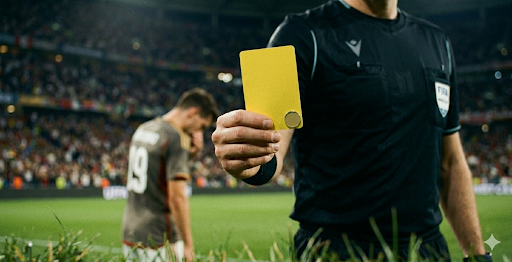
World Cup Referee Selection and Assignment Rules
My friend spent an entire group stage match convinced the referee had it out for his team because he was from a rival confederation. Spent halftime building a full conspiracy theory in the group chat. Sent seventeen messages. Turns out the referee just had a bad game. Same as any other professional having a bad day at work. But the question underneath all that complaining is actually valid. Who picks these referees? How do they end up on the biggest stage in football? And does any of it matter for your bets? Here's the full breakdown.


Who Actually Picks World Cup Referees
FIFA. Only FIFA. Full stop.
The FIFA Refereeing Department and the FIFA Referees Committee run the entire selection and assignment process. National associations don't decide. Host countries don't get a say. No political influence from confederations on who gets appointed to which match.
That centralisation is intentional. FIFA controls the whole pipeline specifically to protect match integrity from outside pressure. One body makes every call from initial nominations through to final tournament assignments.
Read More: The Complete Guide to World Cup Betting 2026
Where the Referees Come From
FIFA draws from its international referee list, which is basically the top of the global officiating pyramid.
To even be considered a referee needs to already be working at:
- Top domestic leagues in their country
- Continental competitions like the Champions League, Copa Libertadores, or AFC Champions League
- Prior youth or senior international tournaments
National associations nominate officials who meet FIFA's criteria on experience, fitness, and assessment scores. But nomination doesn't guarantee selection. FIFA evaluates every candidate independently across multiple seasons before the tournament.
Want better World Cup bets? Use Shurzy's Predictions tool for data-driven picks and insights.
The Multi-Year Selection Process
This doesn't start six months before the World Cup. It starts two to three years out.
Here's how it runs:
Nominations and pre-selection. FIFA invites around 50 referee trios, one main referee plus two assistants, from all confederations as initial candidates. These groups get evaluated across their domestic and international games over multiple seasons.
Training and seminars. Shortlisted referees attend regular FIFA seminars covering fitness testing, Laws of the Game updates, and VAR-specific training. Assessors review decision-making, positioning, game management, and communication throughout.
Final list. Based on performance and evaluations the Referees Committee locks in the final group. For 2026 that's expected to be around 36 referees, 69 assistant referees, and 24 VAR officials to handle the expanded 48-team format.
By the time the tournament starts these officials have been under FIFA's microscope for years. Not months. Years.
Neutrality Rules: Who Can't Referee What
Assignment rules are built around one principle. No conflicts of interest.
A referee cannot officiate matches involving:
- Their own national team
- Teams from their own association
- Direct regional rivals where neutrality could reasonably be questioned
FIFA also aims for confederation balance across appointments but performance and neutrality always take priority over quotas. A referee from any confederation can end up with a semifinal or final if they earn it on merit during the tournament.
Looking to get an edge throughout the entire World Cup? Check out Shurzy's Predictions tool for data-backed picks, matchup insights, and betting angles across every stage of the tournament. Whether it's group matches or knockout rounds, this is where smart bettors find value.
How Assignments Work During the Tournament
Once the World Cup starts, the FIFA Refereeing Department assigns referees to each match based on four factors:
- Neutrality and no conflicts of interest
- Recent performance in the tournament and prior international games
- Experience level and ability to handle high-pressure situations
- Physical readiness and recovery data between matches
Every referee gets evaluated after every single match by FIFA observers and technical officials. Good performances mean higher-profile assignments. A strong group stage leads to knockout rounds. Elite performances across the tournament put officials in line for the quarterfinals, semifinals, and final.
Bad performances or serious errors can get an official dropped from later appointments entirely. The evaluation is ongoing and ruthless.
Read More: World Cup Referee Trends and Betting Impact 2026
VAR Officials: Same System, Same Standards
VAR officials go through the same selection pipeline as on-field referees.
FIFA appoints specialist VARs and assistant VARs with strong experience using semi-automated offside technology and the expanded 2026 protocols. Referee teams now include the on-field trio plus a dedicated VAR team that works together repeatedly for consistency.
FIFA can mix and match teams as needed but the preference is continuity within established groups. Same faces working together across multiple matches means fewer communication errors under pressure.
What This Means for Your Bets
Referee selection matters more than casual bettors give it credit for:
- Card props: Some referees are historically stricter on bookings, tracking assignment patterns matters
- Penalty props: Certain officials call tighter in the box, others let more physical play go
- Game flow bets: Referee style affects tempo, foul counts, and how much the game gets stopped
- Knockout betting: High-pressure officials who've earned elite assignments tend to manage big games more tightly
Once FIFA announces match assignments during the tournament, five minutes checking the assigned referee's statistical profile can genuinely add an edge to your card and corner bets.
The Play
The referee isn't random. They earned that assignment through years of evaluation and they're being watched every single minute they're on the pitch. Conspiracy theories are fun in the group chat but the process is actually more rigorous than most sports.
Track who gets assigned to your match. Check their history on cards, penalties, and game management. It's free information sitting right there.
Before you bet the World Cup, check Shurzy's Predictions for the best betting angles and value plays.

Minimum Juice. Maximum Profits.
We sniff out edges so you don’t have to. Spend less. Win more.


RELATED POSTS
Check out the latest picks from Shurzy AI and our team of experts.