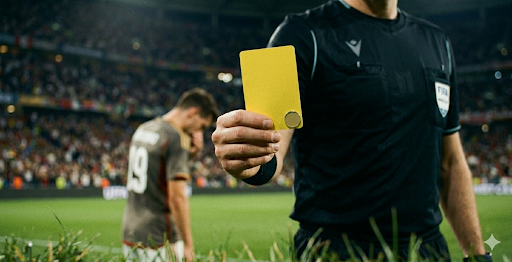
World Cup Squad Size Rules Explained 2026
England 2022 World Cup. Reece James picked up a knee injury before the tournament and nearly didn't make it. Kyle Walker was rushed back from injury to fill the gap. The whole right side of England's defensive structure was being pieced together from a squad that was already stretched. England went out in the quarterfinals to France. Their defensive depth on that right side was a genuine factor in how they coped with Mbappe across 90 minutes. I had England futures. I had tracked their squad fitness going into the tournament and knew the right back situation was fragile. I should have priced that into my outright assessment more aggressively than I did. Squad size rules determine how much depth a team actually has available when things go wrong. And across an eight-game maximum path through a 39-day tournament spanning three countries, things always go wrong for someone. Here's the full breakdown of the 2026 squad size rules.


The headline numbers
Each national team can register a maximum of 26 players for the 2026 World Cup. Same as Qatar 2022.
The specific requirements:
- Minimum 23 players in the final squad
- Maximum 26 players
- At least 3 goalkeepers must be included in every final squad, no exceptions
That three-goalkeeper rule is non-negotiable. Every squad regardless of size must contain at least three goalkeepers. The rest of the 23 to 26 spots can be distributed however the coach decides between defenders, midfielders, and forwards.
Read More: World Cup Substitution Rules Explained 2026
Why 26 and not more
FIFA actually considered expanding to 29 or 30 players for 2026 given the larger tournament format and more matches per team. The argument made sense. More games, longer tournament, more physical load, why not bring more players.
FIFA said no. Stayed at 26.
The reasoning: squads were traditionally capped at 23 players for decades. Qatar 2022 expanded to 26 partly due to COVID-related fixture congestion and it was broadly popular. FIFA kept it for 2026 as the new standard. But going to 30 was seen as tipping the balance too far toward depth over competitive integrity.
The practical result: 26 players is generous enough for meaningful rotation across eight games but tight enough that injuries and suspensions genuinely matter. Losing two or three key players across a deep tournament run still hurts even with a 26-man squad.
What 26 players actually means for betting
Here's where squad size rules connect directly to betting value.
Teams with genuine quality across all 26 spots have a structural advantage over teams whose starting eleven is excellent but whose depth drops sharply by player 15 or 16. In a five-substitution format across four knockout rounds, that depth difference compounds.
Spain, France, and England type nations with fifteen genuinely reliable senior players can rotate meaningfully in group games, keep key players fresh for knockouts, and absorb injuries without their quality dropping dramatically. Teams built around eight or nine essential players have no such buffer.
This is directly relevant for:
- Late-round futures pricing: Depth advantage grows more valuable with every round. Price it more heavily when assessing semi-final and final outright odds than group stage odds.
- Team total overs in second halves: Quality bench options mean more dangerous substitutions. A team that can bring on a genuine goal threat at 60 minutes is more dangerous in the final 30 than a team whose bench is filled with squad players.
- Injury news impact on outright prices: When a key player goes down, the depth question is how much does the 16th or 17th best player on this roster compare to the one they're replacing. For deep squads the answer is not much drop. For thin squads the answer can be significant.
Looking to get an edge throughout the entire World Cup? Check out Shurzy's Predictions tool for data-backed picks, matchup insights, and betting angles across every stage of the tournament. Whether it's group matches or knockout rounds, this is where smart bettors find value.
The goalkeeper rule and why it matters
Three goalkeepers minimum. Every squad. No exceptions.
This means one starting goalkeeper and two genuine backups. In a 26-man squad, three spots are locked to goalkeeping before a single outfield player is named.
For betting this is relevant specifically in goalkeeper injury scenarios during the tournament. If a starting goalkeeper goes down during a game, the replacement comes from the registered squad. The rules around emergency goalkeeper replacements in extreme circumstances are separate and more flexible, but the general principle is that the three registered goalkeepers are the only ones available.
A team whose second goalkeeper is genuinely limited compared to their starter is in a more vulnerable position than one whose backup is nearly as capable. This occasionally creates value in clean sheet markets and team defensive total bets when a team's starting goalkeeper is clearly superior to their deputy.
Want better World Cup bets? Use Shurzy's Predictions tool for data-driven picks and insights.
The play
Twenty-six players maximum. Three goalkeepers minimum. Flexible distribution for the remaining spots.
Know which teams have genuine quality depth across all 26. Know which teams drop off sharply after their first eleven or twelve. Factor that depth question into your outright futures at every stage of the tournament, especially the knockout rounds where accumulated fatigue and injuries compound the depth advantage.
Before you bet the World Cup, check Shurzy's Predictions for the best betting angles and value plays.

Minimum Juice. Maximum Profits.
We sniff out edges so you don’t have to. Spend less. Win more.


RELATED POSTS
Check out the latest picks from Shurzy AI and our team of experts.